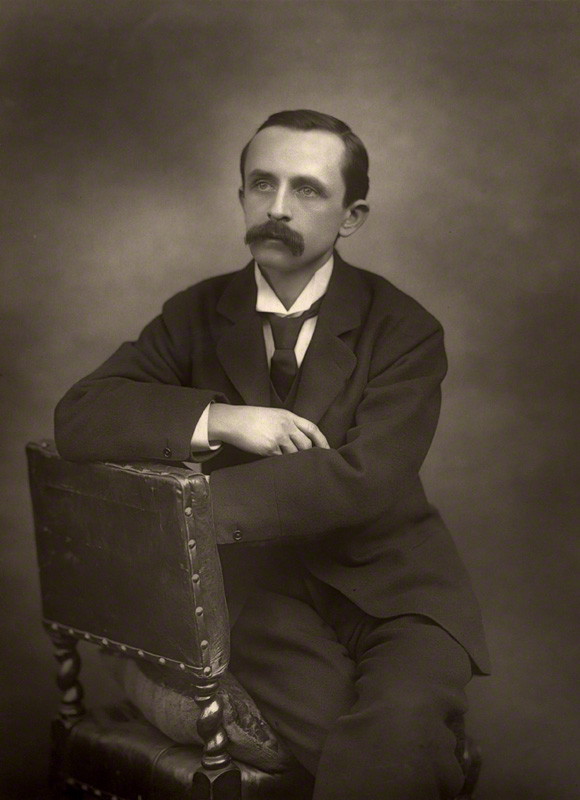
§Author· 1 book
J.M. Barrie
Also known as Sir James Matthew Barrie, James Matthew Barrie, J. M. Barrie
The enduring theatrical and prose fantasy Peter Pan introduced readers and theatre audiences to the mythic realm of Neverland and a boy who refuses to grow up. Created by Scottish dramatist and novelist J.M. Barrie, the story evolved from whimsical tales told to the Llewelyn Davies family into a landmark stage play and subsequent prose adaptations that explored childhood innocence, imagination, and the passage of time.
Career & Background
Born in 1860 in Kirriemuir, Angus, Scotland, James Matthew Barrie was the son of a weaver who grew up in a modest whitewashed cottage alongside seven siblings. His early interest in drama emerged in his childhood yard, where the family wash house served as his first makeshift theatre. After pursuing his education at Dumfries Academy and graduating from the University of Edinburgh, Barrie embarked on a career in journalism before turning his focus to creative writing. He published regional Scottish fiction such as Auld Licht Idylls (1888) and A Window in Thrums (1889), establishing his early literary reputation through detailed sketches of rural Scottish life.
After moving to London, Barrie achieved substantial commercial success with full-length prose fiction and stage productions. His personal acquaintance with the Llewelyn Davies children inspired his most famous character, Peter Pan, who first appeared as an infant figure in the adult novel The Little White Bird (1902). Barrie subsequently developed the narrative into the 1904 West End fairy play Peter Pan, or The Boy Who Wouldn't Grow Up, which brought Wendy, Tinker Bell, and Captain Hook to the stage. Barrie continued writing prolifically for the theatre and published additional prose works throughout his later life, including the play Mary Rose (1920) and the novella "Farewell, Miss Julie Logan" (1937), before his death in London in 1937.
Writing Style & Themes
Barrie's literary work is characterized by a unique combination of domestic realism, social satire, and high romantic fantasy. In his early Scottish stories, he employed sharp observation and regional detail to portray community life and religious traditions. As his focus shifted toward drama and speculative fiction, he frequently examined the tensions between adult responsibilities and the uninhibited imagination of youth. His narrative voice often incorporated direct address, subtle melancholy, and irony, balancing whimsical elements with underlying reflections on mortality, memory, and aging.
A central thematic motif across Barrie's body of work is the preservation of innocence against the inevitable changes of time. Beyond Peter Pan, his plays and prose frequently feature characters caught between disparate worlds or experiencing uncanny supernatural disruptions. His dramatic technique relied heavily on inventive stagecraft and naturalistic dialogue, using fantastical premises to interrogate human relationships, domestic expectations, and emotional loss.
Major Works
- Peter Pan — Originally introduced in earlier prose and staged as the 1904 play Peter Pan, or The Boy Who Wouldn't Grow Up, this fantasy work follows Peter, Wendy, and the Lost Boys in Neverland.
- Auld Licht Idylls — Published in 1888, this early story collection offers humorous and detailed depictions of life and religious culture in a Scottish weaving village.
- A Window in Thrums — Released in 1889, this prose work established Barrie's early reputation through affectionate sketches of rural Scottish community life.
- The Little White Bird — This 1902 novel for adults featured the initial appearance of Peter Pan in chapters detailing magical adventures in Kensington Gardens.
- Mary Rose — A 1920 stage play that explores supernatural mystery, time, and loss through the story of a young woman who periodically vanishes on a Scottish island.
§All Books

Peter Pan
J.M. Barrie, 1911
302 ratings
§ About J.M. Barrie's books
- Books on SansFiction
- 1
- Published
- 1911
- Average rating
- 3.8 / 5 across 302 ratings
- Genres
- Adventure, Classics, Young Adult
The book: Peter Pan (1911)
One starry night, Peter Pan and Tinker Bell lead the three Darling children over the rooftops of London and away to Neverland - the island where lost boys play, mermaids splash and fairies make mischief. But a villainous-looking gang of pirates lurk in the docks, led by the terrifying Captain James Hook.
Common questions about J.M. Barrie
- Who is J.M. Barrie?
- Born in 1860 in Kirriemuir, Angus, Scotland, James Matthew Barrie was the son of a weaver who grew up in a modest whitewashed cottage alongside seven siblings. His early interest in drama emerged in his childhood yard, where the family wash house served as his first makeshift theatre.
- What is J.M. Barrie best known for?
- J.M. Barrie is best known for Peter Pan, published in 1911 with 302 ratings and a 3.8 average. It is the most-rated of J.M. Barrie's books on SansFiction.
- What genres does J.M. Barrie write?
- J.M. Barrie's books on SansFiction are tagged Adventure, Classics and Young Adult.
Explore: Adventure · Classics · Young Adult