Isabel Wilkerson
Narrative nonfiction centered on historic social movements and systemic injustice in America reached new depths through immersive historical research and deep oral history. Isabel Wilkerson spent more than fifteen years researching her landmark study of the Great Migration, The Warmth of Other Suns: The Epic Story of America's Great Migration, before publishing a sweeping examination of human hierarchy in Caste: The Origins of Our Discontents. Her work combines personal human accounts with socio-historical analysis to illuminate how historical systems continue to shape contemporary society.
Career & Background
Born in 1961 in Washington, D.C., Wilkerson grew up as the daughter of parents who had migrated to the nation's capital from smaller Southern communities. She attended Howard University, serving as editor-in-chief of the college newspaper, and completed internships at the Los Angeles Times and The Washington Post. Joining The New York Times, she eventually rose to become the newspaper's Chicago Bureau Chief. In 1994, she made history as the first African American woman to win the Pulitzer Prize for journalism, awarded for her individual feature reporting. Her journalism during this period was also recognized with a George Polk Award.
Following her distinguished career in newspaper journalism, Wilkerson transitioned to academic teaching and full-time book authorship. She served in faculty roles and held endowed lectureships at several institutions, including Emory University, Princeton University, Northwestern University, and Boston University. Her dedication to historical documentation and narrative literature earned her a John Simon Guggenheim Fellowship and the National Humanities Medal in 2015.
Writing Style & Themes
Wilkerson's writing style relies on rigorous empirical reporting paired with deep, empathetic human portraiture. To capture historical movements authentically, she conducts extensive interviews—speaking with more than one thousand people for her first book alone—and travels alongside her subjects to trace their geographic and personal journeys. Her work frequently investigates the invisible mechanisms of social hierarchy, the enduring legacy of systemic division, and the lived experiences of marginalized individuals whose stories were historically omitted from mainstream historical records.
Major Works
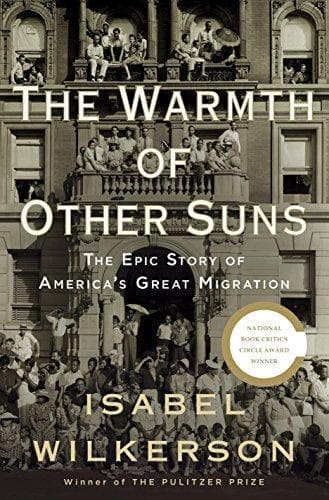
- The Warmth of Other Suns: The Epic Story of America's Great Migration — Published in 2010, this comprehensive chronicle examines the Great Migration of six million African Americans who fled the Jim Crow South for cities in the North and West between World War I and the 1970s. The narrative follows three individual protagonists—including Ida Mae Gladney—to personalize a massive demographic shift, winning the National Book Critics Circle Award for Nonfiction.
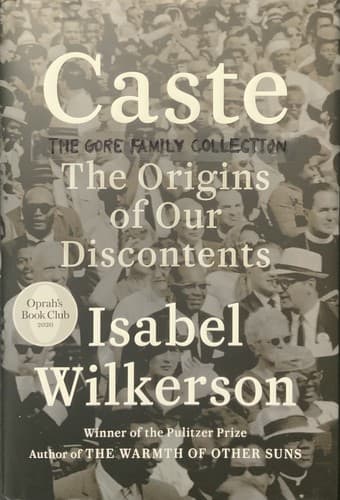
- Caste: The Origins of Our Discontents — Published in 2020, this investigative study analyzes how hidden caste systems, social hierarchies, and deeply embedded injustice shape American society, drawing comparisons with historical social structures across the globe to explore systemic division and human commonality.
Caste: The Origins of Our Discontents