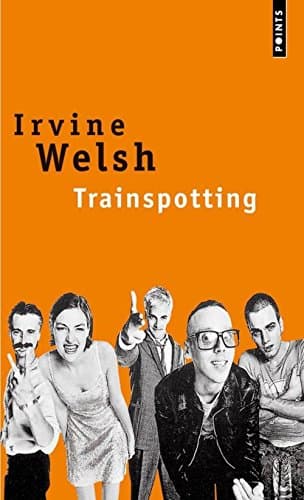
Irvine Welsh
Gritty depictions of working-class Scottish life, social alienation, and urban struggle define the body of fiction that launched with the novel Trainspotting. Scottish novelist Irvine Welsh captured the stark realities of Edinburgh's marginalized communities during the Margaret Thatcher era, using raw voice and psychological realism to explore drug addiction, economic hardship, and subcultural life.
Career & Background
Born in the port district of Leith in Edinburgh on September 27, 1958, Irvine Welsh grew up moving from tenement housing to a council estate in Muirhouse. After leaving Ainslie Park Secondary School at sixteen, he completed a City Guild course in electrical engineering and worked briefly as an apprentice television repairman before an electric shock prompted him to leave the trade. In 1978, Welsh relocated to London to join the punk music scene, playing guitar and singing in bands such as The Pubic Lice and Stairway 13. During his early twenties in London, he worked for Hackney Council, studied computing through a grant from the Manpower Services Commission, and lived through an eighteen-month period of heroin addiction in the 1980s. Upon returning to Edinburgh, he took a position in the city council's housing department and began turning his personal journals and observations into fiction.
Welsh broke onto the literary landscape with his 1993 debut novel Trainspotting, which drew heavily on his personal diaries and experiences in Thatcher-era Scotland. The book follows four working-class Edinburgh friends—Renton, Sick Boy, Spud, and Begbie—navigating addiction, poverty, and boredom. Its high-profile 1996 film adaptation, directed by Danny Boyle, introduced his writing to global audiences. Over the following decades, Welsh expanded his literary production to encompass sixteen novels, four short-story collections, ten screenplays, and numerous stage scripts. His subsequent books include Filth, Porno, and The Acid House, establishing a broad canon of dark, satirical Scottish fiction while Welsh split his time between London, Edinburgh, and Miami.
Writing Style & Themes
Welsh's literary output is characterized by its unvarnished examination of working-class Scottish life, systemic neglect, and subcultural dynamics. His stories frequently center on characters confronting drug addiction, social alienation, institutional failure, and economic stagnation down the Forth estuary and across Edinburgh's housing schemes. Narrative voices in his work rely on vernacular rhythms and unfiltered interior monologues that blur dark humor with harrowing social commentary. By confronting the bleak realities of urban decay alongside fierce communal bonds and sardonic humor, Welsh created a distinct body of fiction rooted in native Scottish settings.
Major Works
- Trainspotting — Published in 1993, this debut novel details the lives of four working-class friends dealing with heroin addiction and economic stagnation in Margaret Thatcher's Scotland, later becoming a landmark 1996 film directed by Danny Boyle.
- The Acid House — A 1994 short-story collection showcasing surreal humor, harsh social realism, and vernacular Edinburgh voices.
- Porno — A continuation of the Trainspotting story, following Renton, Begbie, Sick Boy, and Spud years later as they enter new commercial and personal ventures.
- Filth — A novel focusing on a corrupt, misanthropic Edinburgh police officer, exploring themes of psychological breakdown and institutional depravity.