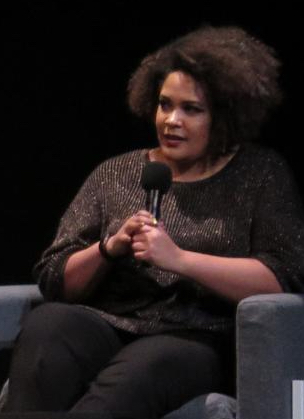
§Author· 2 books
Ijeoma Oluo
Accessible non-fiction examining systemic racism, intersectionality, and institutional oppression has reshaped contemporary discussions on social justice in America, most notably through the bestseller So You Want to Talk about Race. Written by American author and journalist Ijeoma Oluo, this body of work offers clear, practical frameworks for understanding racial dynamics and challenging structural inequality across everyday life, education, and politics.
Career & Background
Born in Denton, Texas in 1980 and currently based in Seattle, Washington, Oluo began her writing career addressing systemic racism, misogynoir, feminism, and social justice through digital media and journalism. She served as an editor-at-large for The Establishment and contributed prominent commentary to publications including The Guardian, Jezebel, The Stranger, Medium, The New York Times, and The Washington Post. In 2015, she was named one of the most influential people in Seattle, and in 2018 was recognized as one of the city's 50 most influential women.
Oluo's national literary recognition expanded following the 2018 publication of So You Want to Talk about Race, which became a #1 New York Times bestseller. Her contributions to public discourse earned her the 2018 Feminist Humanist Award and the 2020 Harvard Humanist of the Year Award from the American Humanist Association. She was subsequently named twice to the Root 100 and selected for the 2021 TIME 100 Next list, highlighting her impact as a writer and public advocate.
Writing Style & Themes
Oluo's writing combines sharp analytical critique with direct, conversational prose that makes complex sociological concepts accessible to broad audiences. Her work consistently explores recurring themes such as intersectionality, online harassment, systemic racism in education and economics, and the history of white male supremacy. By pairing historical analysis with personal narrative and practical guidance, she bridges the gap between critical theory and actionable advocacy.
In addition to dissecting institutional power structures, Oluo emphasizes individual agency, community organizing, and grassroots activism. Rather than presenting systemic oppression as an insurmountable hurdle, her narratives focus on accountability, hope, and actionable ways for ordinary citizens to participate in meaningful social change.
Major Works
- So You Want to Talk about Race — Published in 2018, this #1 New York Times bestseller provides an accessible guide to understanding and discussing race, privilege, systemic oppression, microaggressions, and intersectionality in contemporary American society.
- Be a Revolution: How Everyday People Are Fighting Oppression and Changing the World--And How You Can, Too — Published in 2024, this work profiles activists, community organizers, and everyday people working against systemic oppression, shifting focus toward hope, community power, and practical avenues for social justice work.
- Mediocre: The Dangerous Legacy of White Male America — Published in 2020, this investigative cultural history traces the legacy and impact of white male privilege and supremacy in American politics, workplace culture, and public institutions.
§All Books
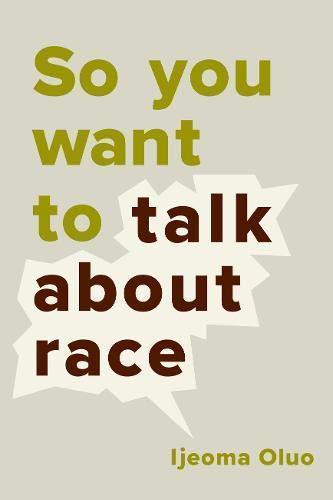
So You Want to Talk about Race
Ijeoma Oluo, 2018
194 ratings

§ About Ijeoma Oluo's books
- Books on SansFiction
- 2
- Published
- 2018–2024
- Average rating
- 4.6 / 5 across 196 ratings
- Genres
- Lgbtq, Nonfiction
Start here: So You Want to Talk about Race (2018)
In this #1 New York Times bestseller, Ijeoma Oluo offers a revelatory examination of race in America A current, constructive, and actionable exploration of today’s racial landscape, offering straightforward clarity that readers of all races need to contribute to the dismantling of the racial divide In So You Want to Talk about Race, editor-at-large of the…
Common questions about Ijeoma Oluo
- Who is Ijeoma Oluo?
- Born in Denton, Texas in 1980 and currently based in Seattle, Washington, Oluo began her writing career addressing systemic racism, misogynoir, feminism, and social justice through digital media and journalism. She served as an editor-at-large for The Establishment and contributed prominent commentary to publications including The Guardian, Jezebel, The Stranger, Medium, The New York Times, and The Washington Post.
- What is Ijeoma Oluo best known for?
- Ijeoma Oluo is best known for So You Want to Talk about Race, published in 2018 with 194 ratings and a 4.6 average. It is the most-rated of Ijeoma Oluo's books on SansFiction.
- How many books has Ijeoma Oluo written?
- SansFiction lists 2 books by Ijeoma Oluo, published between 2018 and 2024. The most popular are So You Want to Talk about Race and Be a Revolution: How Everyday People Are Fighting Oppression and Changing the World--And How You Can, Too.
- Which Ijeoma Oluo book should I read first?
- So You Want to Talk about Race is the usual place to start: it is Ijeoma Oluo's most-rated book here, with a 4.6 average.
- What genres does Ijeoma Oluo write?
- Ijeoma Oluo's books on SansFiction are tagged Lgbtq and Nonfiction.
Explore: Lgbtq · Nonfiction