
§Author· 2 books
Hugh Howey
Also known as Hugh C. Howey, Hugh Crocker Howey
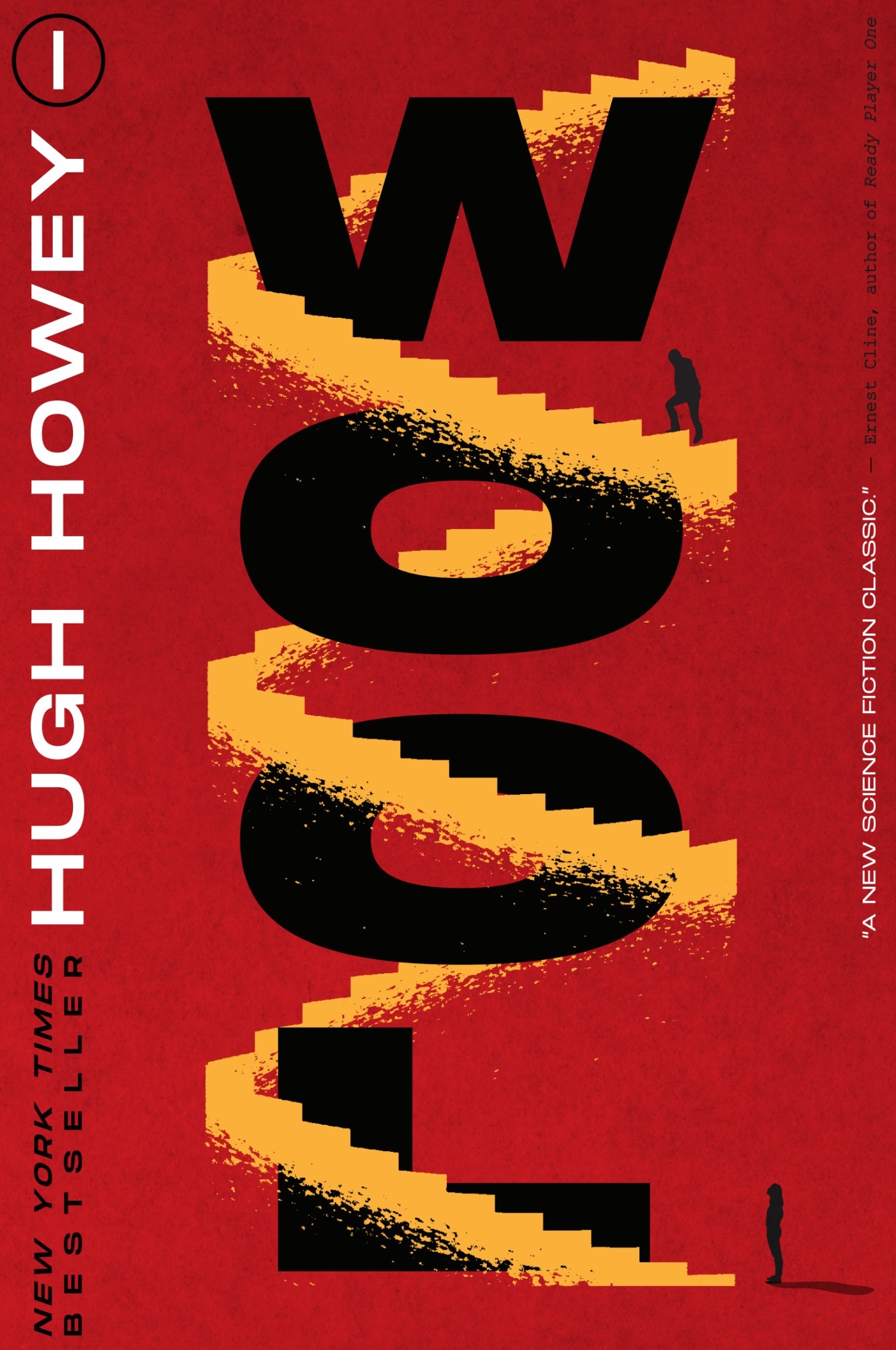
Dystopian science fiction received a major addition with the subterranean survival tale Wool, a story detailing a multi-layered underground community living inside a massive silo. American author Hugh Howey independently published the original novelette in 2011 before expanding the narrative into a bestselling series that captured widespread reader interest across digital and print formats. His work explores human survival under extreme environmental constraints, political secrecy, and the psychological burden of living in sealed environments.
Career & Background
Born in 1975 in Charlotte, North Carolina, Hugh Howey spent his formative years completing primary education while engaging in soccer, chess, and early attempts at novel writing. After high school, he repaired computers before moving to Charleston, South Carolina, where he attended college. To save money, he purchased a small sailboat to live on and navigated it down from Baltimore with a friend in a perilous voyage. After his junior year of college, he departed for the Caribbean, navigating through two hurricanes and spending his remaining cruising funds to re-step his boat's mast. He subsequently built a career as a yacht captain, traveling along the East Coast and Caribbean from Barbados to Chicago, as well as working on vessels in New York, the Bahamas, and Canada.
Following his time at sea, Howey settled ashore, working as a roofer and a bookstore clerk while resuming his passion for writing fiction. Drawing inspiration from remarkable women in his life, he created the character Molly Fyde and debuted her story in Molly Fyde and the Parsona Rescue in 2009. He followed this space opera with three self-published sequels—Molly Fyde and the Land of Light, Molly Fyde and the Blood of Billions, and Molly Fyde and the Fight for Peace—as well as the standalone science fiction novel Half Way Home in 2010. His self-publishing approach took a dramatic turn in 2011 when strong customer feedback for Wool prompted him to write additional novellas set in the subterranean universe, culminating in an omnibus edition that achieved massive commercial success.
The success of Wool attracted major media coverage in publications such as Entertainment Weekly, Variety, and Deadline Hollywood, while also securing film option interest from Ridley Scott and Steve Zaillian. In 2013, Random House published the UK hardback edition. Howey negotiated distribution deals that allowed him to partner with traditional publishing houses for print distribution while retaining full ownership and direct control of his digital e-book rights. His later publications expand the Silo series with Shift and Dust, alongside other works including Sand, Beacon 23, and the short story collection Machine Learning. His screen adaptations include the Apple TV television series based on his Silo trilogy and a television adaptation of Beacon 23.
Writing Style & Themes
Howey's writing style is characterized by atmospheric world-building, tightly paced suspense, and deep thematic focus on societal isolation, institutional opacity, and human resilience. In his Silo series, including Wool and Shift, he constructs claustrophobic environments where strict social hierarchies and enforced memory suppression maintain order against invisible post-apocalyptic hazards. His narrative approach often utilizes shifting perspectives, revealing secrets incrementally to heighten tension and mirror his characters' gradual realization of hidden truths about their artificial worlds.
Beyond underground silos, Howey's speculative fiction repeatedly examines how human ingenuity and moral choices withstand environmental degradation and high-tech isolation. Whether portraying sand-diving scavengers in desolate landscapes or solitary lighthouse operators in deep space, he emphasizes technical realism, practical problem-solving, and emotional groundedness. His publishing career also reflects a pragmatic, reader-focused philosophy, drawing upon direct reader feedback and maintaining flexible creative control across self-publishing and traditional publishing models. Note on biographical documentation: [From Hugh Howey web page.][1]
Major Works
- Wool — Originally published in 2011 as a standalone novelette, this foundational post-apocalyptic story introduced a subterranean silo community where human survivors live under rigid rules. Driven by overwhelming reader demand, Hugh Howey expanded the narrative into a full-length omnibus that achieved #1 bestseller status in science fiction on Amazon and spawned a global multi-format franchise.
- Shift — Serving as a prequel to Wool, this novel explores the creation of the subterranean silos and the historical decisions that led to humanity's underground containment. It provides essential background on the political cabal and technology that govern the Silo universe.
- Molly Fyde and the Parsona Rescue — Published in 2009, this Young Adult space opera launched Howey's career with the story of a young space cadet navigating interstellar conflicts, forming the first entry in the four-book Bern Saga.
- Beacon 23 — A science fiction novel following a lonely beacon operator in deep space navigating solitude, war, and psychological stress, later adapted into a television series starring Lena Headey.
- Sand — A post-apocalyptic novel set in a world buried beneath shifting sand dunes, focusing on a family of sand-divers who explore ruined subterranean cities.

§ About Hugh Howey's books
- Books on SansFiction
- 2
- Published
- 2011–2013
- Average rating
- 4.1 / 5 across 1,842 ratings
- Genres
- Adventure, Dystopian, Fantasy, Adulte
- Series
- Silo
Start here: Wool (2011)
"The world outside has grown toxic, the view of it limited, talk of it forbidden. The remnants of humanity live underground in a single silo. But there are always those who hope, who dream. These are the dangerous people, the residents who infect others with their optimism. Their punishment is simple.
Common questions about Hugh Howey
- Who is Hugh Howey?
- Born in 1975 in Charlotte, North Carolina, Hugh Howey spent his formative years completing primary education while engaging in soccer, chess, and early attempts at novel writing. After high school, he repaired computers before moving to Charleston, South Carolina, where he attended college.
- What is Hugh Howey best known for?
- Hugh Howey is best known for Wool, published in 2011 with 1,239 ratings and a 4.1 average. It is the most-rated of Hugh Howey's books on SansFiction.
- How many books has Hugh Howey written?
- SansFiction lists 2 books by Hugh Howey, published between 2011 and 2013. The most popular are Wool and Shift.
- What order should I read Hugh Howey's Silo books in?
- Read the Silo books in series order: 1. Wool, 2. Shift.
- What genres does Hugh Howey write?
- Hugh Howey's books on SansFiction are tagged Adventure, Dystopian, Fantasy and Adulte.