
§Author· 1 book
George Bernard Shaw
Also known as Bernard Shaw, G. B. Shaw, George Bernhard Shaw
Dramatic satire and social commentary defined twentieth-century theatre through works that challenged conventional morality and class structures, most famously in Pygmalion: A Romance in Five Acts. George Bernard Shaw crafted plays that used sharp wit, intellectual debate, and vivid comedic situations to critique contemporary society while revitalizing stage comedy.
Born in Dublin and active in London throughout his adult life, he expanded his literary efforts from music and theatre journalism to playwriting, producing more than sixty plays alongside political pamphlets and essays. His stage work earned him both the 1925 Nobel Prize in Literature and a 1938 Academy Award for screenplay adaptation.
Career & Background
George Bernard Shaw was born on July 26, 1856, in Dublin, Ireland, to George Carr Shaw, a former civil servant, and Lucinda Elizabeth Gurly, a singing teacher. After working as a clerk in a Dublin land agent's office, he moved to London in 1876 to pursue writing. In London, he established himself as a prominent music and theatre critic during the 1880s and 1890s, while becoming a leading member of the Fabian Society. Alongside his political activism and writing of Fabian pamphlets, he helped found institutions such as the London School of Economics alongside his wife Charlotte. Although his initial efforts as a novelist met with limited commercial success, his turn to playwriting established his central role in modern Western drama.
Over a career spanning several decades, Shaw produced dozens of stage works that reshaped theatrical conventions. His plays combined ideological debate with satirical comedy, addressing topics ranging from poverty and women's rights to religion and historical figures. In 1925, he received the Nobel Prize in Literature following the acclaim of his play Saint Joan, and in 1938 he won an Academy Award for his screenplay adaptation of Pygmalion. He continued writing and publishing until his death on November 2, 1950, in Ayot St. Lawrence, Hertfordshire, England.
Writing Style & Themes
Shaw's writing is characterized by intellectual dialogue, paradox, and satirical humor designed to question social conventions. Combining contemporary satire with historical allegory, he turned the stage into a forum for political and social debate. His characters often represent distinct philosophical positions, engaging in spirited discussions about class mobility, economic inequality, and moral hypocrisy.
Rather than relying on traditional romantic or melodramatic tropes, Shaw used wit and inverted stage stereotypes to prompt audiences to examine their assumptions. His plays feature extensive preface essays and detailed stage directions, providing explicit political context and philosophical arguments that complemented the dramatic action.
Major Works
- Pygmalion: A Romance in Five Acts — Written in 1912 and performed in 1913, this celebrated comedy explores British class distinctions and phonetics through the story of phonetics professor Henry Higgins and cockney flower girl Eliza Doolittle. Shaw later adapted the play into a 1938 film screenplay, earning an Academy Award.
- Man and Superman — Published in 1902, this four-act drama incorporates philosophical themes and comedic satire, featuring an extended dream sequence in the third act that examines creative energy and human evolution.
- Saint Joan — Premiering in 1923, this historical drama dramatizes the life, trial, and martyrdom of Joan of Arc, illustrating Shaw's exploration of religious faith, nationalism, and institutional power.
§All Books
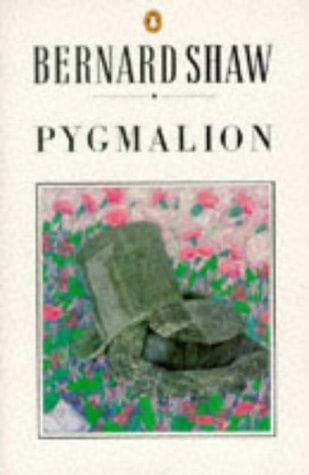
Pygmalion: A Romance in Five Acts
George Bernard Shaw, 1912
124 ratings