Ezra Jack Keats
Also known as Ezra Keats, EZRA JACK KEATS, Jack Ezra Keats, Ezra* Jack Keats
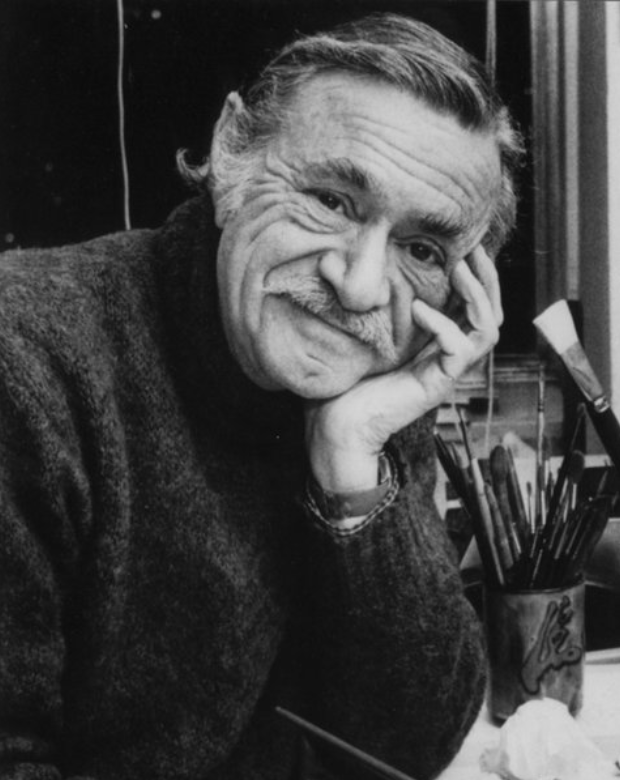
Ezra Jack Keats was born on March 11, 1916 in the East New York section of Brooklyn. He was the third child of Benjamin Katz and Augusta “Gussie” Podgainy, Polish Jews who came to the United States to escape the aggressive antisemitism in Europe.
Ezra received three art school scholarships after high school, but instead he worked to help support his family and took art classes whenever he could. Among the jobs he held were with the Works Progress Administration (WPA) as a mural painter and at Fawcett Publications, illustrating backgrounds for the Captain Marvel comic strip.
Ezra joined the Army in 1943 and designed camouflage patterns used to help win World War II. In 1947, having experienced severe antisemitism before, during and after the war, he changed his name to Ezra Jack Keats, to get work as a fine, as well as commercial artist.
In 1949, with help from his brother William, Ezra studied painting in Paris and traveled around Europe. Many of the paintings he created in Europe were later exhibited in America. He continued to paint and exhibit his fine art throughout his life but after returning to New York, he earned a living as a commercial artist. His illustrations appeared in Reader’s Digest, the New York Times Book Review, Collier’s and Playboy, as well as on the jackets of popular books.
It was because Elizabeth Riley, an editorial director at Crowell Publishing, saw one of his covers in a bookstore window, that Ezra was drawn into the world of children’s literature. Riley invited him to illustrate a few picture books for Crowell. The first was Jubilant for Sure, by Elizabeth Hubbard Lansing, published in 1954. In the years that followed, Keats was hired to illustrate many children’s books written by other authors, among them the Danny Dunn adventure series.
Ezra’s first attempt at writing and illustrating his own children’s book was My Dog is Lost!, co-authored with Pat Cherr and published in 1960. Juanito loses his dog upon arriving in New York City from Puerto Rico. Speaking only Spanish, Juanito searches the city, meeting children from Chinatown, Little Italy and Harlem.
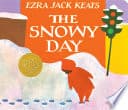
Then, Annis Duff, an editor at Viking Press, invited Ezra to write and illustrate a book of his own. “Then began an experience that turned my life around,” he wrote, “working on a book with a black kid as hero. None of the manuscripts I’d been illustrating featured any black kids—except for token blacks in the background. My book would have him there simply because he should have been there all along.” Ezra’s inspiration for the character of Peter was a group of photographs he had clipped from a 1940 issue of Life magazine depicting a little boy about to get a blood test, “Years before I had cut from a magazine a strip of photos of a little black boy. I often put them on my studio walls before I’d begun to illustrate children’s books. I just loved looking at him. This was the child who would be the hero of my book.” This book was The Snowy Day. Published in 1962, The Snowy Day was awarded the Caldecott Medal in 1963.
The honors he received over the course of his career ran the gamut from his being the first artist invited to design greeting cards for UNICEF (1970), and the first children’s book author invited to donate his papers to Harvard University, to having a roller rink in Japan named in his honor and appearing on Mr. Roger’s Neighborhood four times.
Ezra died in 1983 after suffering a major heart attack during the time he was illustrating and writing his version of The Giant Turnip, a beloved folktale. To this day his books are translated into languages that span the globe and adapted into plays, operas, and major animated movies. The Library of Congress counts The Snowy Day as a book that has shaped America and it is the most checked out book in the 125 year history of the New York Public Library.
(https://www.ejkf.org/ezras-bio/)