
§Author· 1 book
Eric Ries
Entrepreneurial management literature was fundamentally reshaped by the concepts of rapid experimentation, minimum viable products, and continuous innovation. Eric Ries introduced these principles to a global audience in his bestseller, The Lean Startup: How Today's Entrepreneurs Use Continuous Innovation to Create Radically Successful Businesses. His writing bridges software engineering methodologies with executive decision-making to eliminate wasted effort in new business ventures.
Career & Background
Born on September 22, 1978, Ries earned a B.S. in Computer Science from Yale University in 2001. While an undergraduate, he co-founded Catalyst Recruiting, launching his career in technology and business development. He continued as a senior software engineer at There.com, focusing on agile software development, before co-founding the online social network IMVU, where he served as Chief Technology Officer. BusinessWeek named him one of the Best Young Entrepreneurs of Tech in 2007, and he received a TechFellow award in Engineering Leadership in 2009.
After leaving IMVU, Ries served as a venture advisor at Kleiner Perkins and began advising startups independently, documenting his insights on his blog, Startup Lessons Learned. In 2010, he became an Entrepreneur-in-Residence at Harvard Business School. He went on to found the Long-Term Stock Exchange (LTSE), serving as Executive Chair, and co-found Answer.AI, applying his management and governance theories to corporate institutional design.
Writing Style & Themes
Drawing from his background as a software engineer, entrepreneur, and startup advisor, Ries writes with a pragmatic, structured style focused on corporate governance, organizational scaling, and empirical testing. His work centers on adapting lean manufacturing and agile development methodologies to management challenges across companies of all sizes. Rather than relying on static business plans, his frameworks advocate for continuous adaptation, validated learning, and structural incentives that protect long-term value.
Major Works
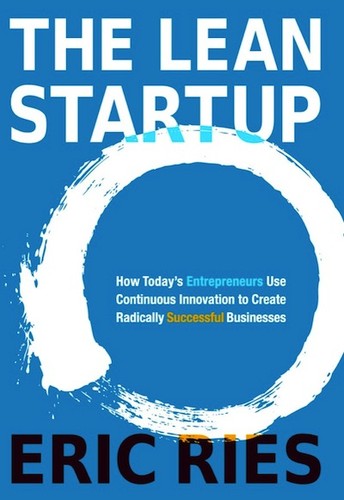
- The Lean Startup: How Today's Entrepreneurs Use Continuous Innovation to Create Radically Successful Businesses — Published by Crown Business, this New York Times bestseller establishes the Lean Startup framework, emphasizing validated learning, iterative development, and rapid product experimentation.
- The Leader's Guide — Funded in 2015 by one of Kickstarter's most successful publishing campaigns with over $500,000 raised, this handbook provides practical guidance on scaling Lean Startup principles within large organizations.
- The Startup Way — This book expands entrepreneurial management principles into established enterprises, detailing governance frameworks and operational shifts required for sustained corporate innovation.
- Incorruptible: Why Good Companies go Bad...and How Great Companies Stay Great — This work examines corporate governance, structural incentives, and leadership, offering insights into building resilient, accountable, and mission-driven institutions.
§All Books
§ About Eric Ries's books
- Books on SansFiction
- 1
- Published
- 2011
- Average rating
- 4.0 / 5 across 279 ratings
- Genres
- Business, Consumers' Preferences, Nonfiction
The book: The Lean Startup: How Today's Entrepreneurs Use Continuous Innovation to Create Radically Successful Businesses (2011)
Outlines a revisionist approach to management while arguing against common perceptions about the inevitability of startup failures, explaining the importance of providing genuinely needed products and services as well as organizing a business that can adapt to continuous customer feedback.
Common questions about Eric Ries
- Who is Eric Ries?
- Born on September 22, 1978, Ries earned a B.S. in Computer Science from Yale University in 2001. While an undergraduate, he co-founded Catalyst Recruiting, launching his career in technology and business development. He continued as a senior software engineer at There.com, focusing on agile software development, before co-founding the online social network IMVU, where he served as Chief Technology Officer.
- What is Eric Ries best known for?
- Eric Ries is best known for The Lean Startup: How Today's Entrepreneurs Use Continuous Innovation to Create Radically Successful Businesses, published in 2011 with 279 ratings and a 4.0 average. It is the most-rated of Eric Ries's books on SansFiction.
- What genres does Eric Ries write?
- Eric Ries's books on SansFiction are tagged Business, Consumers' Preferences and Nonfiction.
Explore: Business · Consumers' Preferences · Nonfiction