Elif Batuman
Explorations of language, academic obsession, and young adulthood form the core of contemporary comic and autobiographical fiction. Author Elif Batuman achieved wide recognition with her 2017 novel The Idiot, which traces a college freshman's intellectual and emotional awakening at Harvard in the mid-1990s. Grounded in comparative literature and personal experience, her writing examines how classic texts shape real-life choices and human relationships.
Alongside catalog classics that explore social etiquette and youth like The Age of Innocence, Batuman's work offers a distinct, humor-infused perspective on cultural identity and literary devotion. Her essays and novels bridge the gap between academic study and the awkward realities of everyday experience, capturing the comedic friction between high art and human blunder.
Career & Background
Born in New York City to Turkish parents in 1977, Batuman attended Harvard College, graduating in 1999, before pursuing a PhD in comparative literature at Stanford University. Early in her career, she published essays and articles in publications such as n+1 and Harper's Magazine, establishing a voice that blended literary criticism with personal narrative. In 2010, she joined The New Yorker as a staff writer, reporting on diverse subjects ranging from dung beetles and psychological testing to Epictetus and a women's theatre troupe in a Turkish village.
That same year, she published her first book, The Possessed: Adventures with Russian Books and the People Who Read Them, a collection of interconnected comic essays exploring her deep engagement with Russian literature. The book was a finalist for the National Book Critics Circle Award in criticism. Batuman has held academic and writing appointments, including residencies at Koç University in Istanbul, Baruch College, and as a Cullman Fellow at the New York Public Library, alongside receiving a Whiting Writers' Award and a Rona Jaffe Foundation Writers' Award.
Writing Style & Themes
Batuman's writing style is defined by deadpan humor, sharp observation, and an immersion in literary theory and philosophy. Her narratives frequently center on Turkish American protagonists navigating foreign environments, elite university settings, and complex interpersonal dynamics. By referencing major works of literature and philosophical texts—such as Søren Kierkegaard's 1843 classic Either/Or—she investigates how readers apply theoretical ideas to real-world romance, language acquisition, and self-discovery.
Major Works
- The Possessed: Adventures with Russian Books and the People Who Read Them — Published in 2010, this collection of interconnected comic essays reflects Batuman's experiences studying Russian literature and visiting academic conferences and historic locations. The volume was named a finalist for the National Book Critics Circle Award in criticism.
- The Idiot — Released in 2017, Batuman's debut novel follows Selin Karadağ, a Turkish American freshman at Harvard in the mid-1990s, as she navigates linguistics, early email communication, and a complicated relationship. The novel was a finalist for the 2018 Pulitzer Prize for Fiction and shortlisted for the Women's Prize for Fiction.
- Either/Or — Published in 2022 as a direct sequel to The Idiot, this novel details Selin's sophomore year at Harvard as she draws on literature and philosophy to understand her previous experiences and guide her creative ambition.
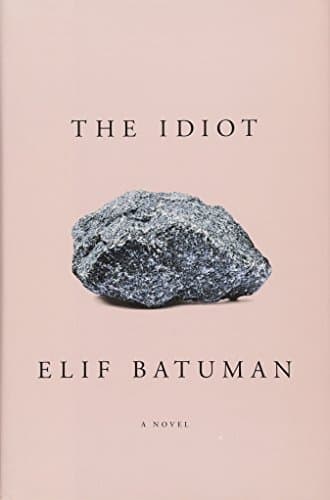
The Idiot