Elie Wiesel
Also known as Eliezer Wiesel, Eliezer 'Elie' Wiesel
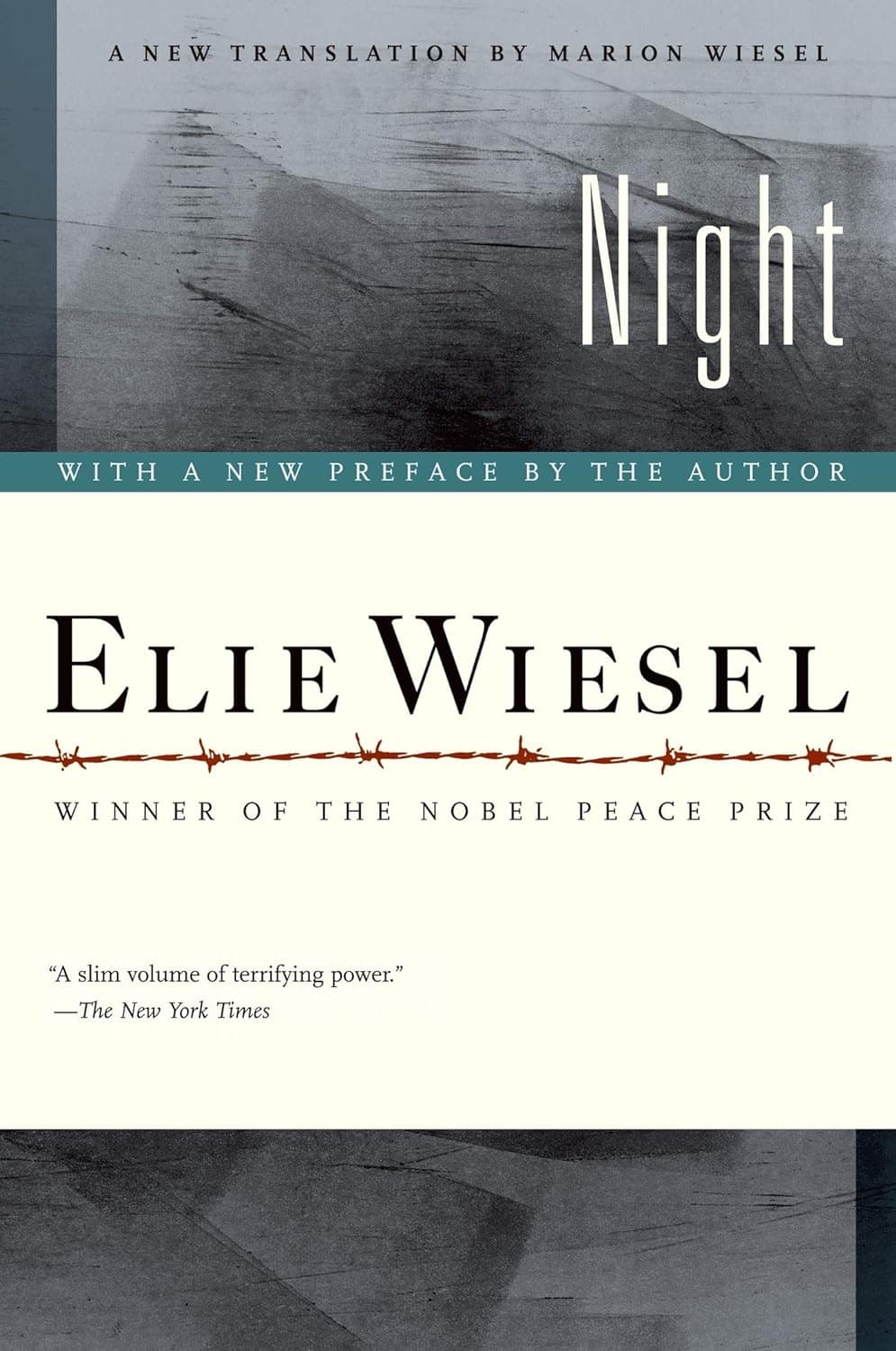
Personal testimonies of wartime atrocities provide vital historical record and moral reflection on the destruction of European Jewry during World War II, most notably through the slim, devastating memoir Night. Written by Eliezer Wiesel, a Romania-born American author, political activist, and Holocaust survivor of Hungarian Jewish descent, the book recounts his teenage imprisonment in the Auschwitz and Buchenwald concentration camps where his parents and younger sister perished.
The publication of Night brought global attention to the human suffering caused by Nazi persecution and established a foundational text in Holocaust literature translated into more than thirty languages.
Career & Background
Born on September 30, 1928, in Sighet, Transylvania (then part of Romania and later annexed by Hungary in 1940), Wiesel grew up in a close-knit Hasidic Jewish community where he engaged in religious study and contemplation. In March 1944, German troops occupied the region, leading to the deportation of Sighet's Jewish population to Nazi extermination camps. Following his liberation from Buchenwald by Allied forces in 1945, he relocated to Paris, where he studied at the Sorbonne and worked as a journalist. A pivotal interview with French author François Mauriac persuaded him to document his wartime experiences, resulting in the French publication of La Nuit (Night) in 1958 and its English release in 1960.
Over his career, Wiesel expanded his bibliography to more than fifty published works across multiple genres, including novels, essays, plays, cantatas, and theological commentaries written in French, English, Yiddish, and Hebrew. Alongside his literary output, he served as a professor, human rights activist, and public speaker. His international advocacy and efforts to commemorate victims of oppression earned him the Nobel Peace Prize in 1986. Later, on November 30, 2006, Wiesel received an honorary knighthood in London, England, in recognition of his work toward raising Holocaust education in the United Kingdom.
Writing Style & Themes
Wiesel's writing presents a sober yet passionate testament to the horrors of the Holocaust, repeatedly examining themes of faith, silence, guilt, memory, and moral responsibility in the wake of mass trauma. His work spans diverse formats—ranging from autobiographical accounts to fictional narratives, parables, and biblical commentaries—that repeatedly re-examine the paradoxes, symbols, and spiritual crises arising from genocide.
Technically, Wiesel's prose frequently combines spare, restrained narrative pacing with intense theological inquiry and Hasidic storytelling traditions. By juxtaposing stark historical reality with philosophical dialogues and parabolic structures, his books challenge readers to confront both the vulnerability of religious conviction and the ethical imperative never to remain silent in the presence of injustice.
Major Works
- Night — First published in French as La Nuit in 1958 and translated into English in 1960, this classic memoir details the author's harrowing experiences as a teenage prisoner at Auschwitz and Buchenwald, documenting the loss of his family, the struggle for physical survival, and the profound crisis of faith that followed.
- Dawn — Published in 1961 as a fictional companion to his memoir, this novel explores the ethical torment of a Holocaust survivor recruited by an underground Jewish movement in mandatory Palestine, shifting the thematic focus from surviving violence to the moral burden of committing it.
- The Accident — Released in 1962 and later republished under the title Day, this novel follows a Holocaust survivor in New York who suffers a near-fatal traffic accident, examining the lingering psychological trauma and subconscious desire for death that haunt survivors of catastrophic loss.