Edward Ashton
Exploring human identity, mortality, and technological progress through high-concept science fiction, the novel Mickey7 brought widespread recognition to author Edward Ashton prior to its film adaptation directed by Bong Joon-ho. Ashton combines speculative genre premises—ranging from expendable human clones to body-hopping artificial intelligence—with grounded, often dark humor and authentic scientific insights.
Career & Background
Born on January 10, 1968, in Fairfax, Virginia, Edward Ashton developed a career that spans both speculative fiction writing and scientific research. Alongside his literary work, Ashton works as a research scientist involved in medical studies, including participating on a team that achieved approval for a novel pediatric glioblastoma treatment, while also teaching quantum physics to graduate students. His career in fiction began with short stories appearing in venues such as Perihelion, Escape Pod, Analog, and Fireside Fiction, starting with his 2014 publication 'Midnight in Absheron.' He published his debut novel, Three Days in April, in 2015, followed by the genetic-engineering novel The End of Ordinary in 2017. Ashton currently resides in a cabin in upstate New York.
Writing Style & Themes
Ashton's writing is defined by its blend of rigorous scientific concepts, moral dilemmas, and satirical character perspectives. Drawing directly from his background in physics and medical research, he constructs science fiction narratives that probe ethical questions surrounding artificial intelligence, human consciousness transfer, genetic manipulation, and interstellar exploration. His prose balances high-stakes technological crises with dry humor, existential pragmatism, and grounded character dynamics. Whether depicting an expendable clone calculating his own survival or an indifferent AI navigating human warfare, Ashton continuously examines how individuals adapt to extreme environments and disruptive technologies.
Major Works
- Mickey7 — Published as a high-concept science fiction novel, this story follows an expendable clone sent on hazardous colonizing missions who refuses to allow his replacement to take over. It served as the basis for the feature film Mickey 17, directed by Bong Joon-ho, and was followed by the sequel novel Antimatter Blues.
- Mal Goes to War — This 2024 novel centers on Mal, a body-hopping artificial intelligence who navigates human conflict with detached cynicism until becoming entangled in the struggles of a young woman.
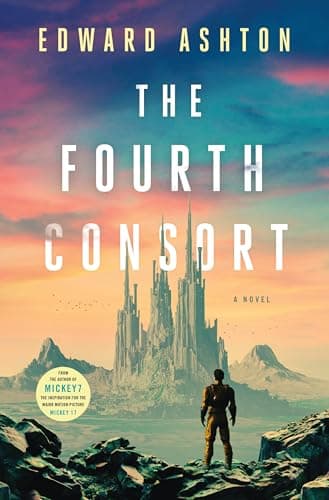
- The Fourth Consort — A 2025 space opera set during the early era of interstellar travel, focusing on the political and personal complexities of first contact.
- Three Days in April — Ashton's 2015 debut novel, which marked his transition from short speculative fiction to full-length fiction.
- The End of Ordinary — A 2017 speculative thriller exploring the societal upheaval caused by genetic engineering experiments in the wake of a major conflict.
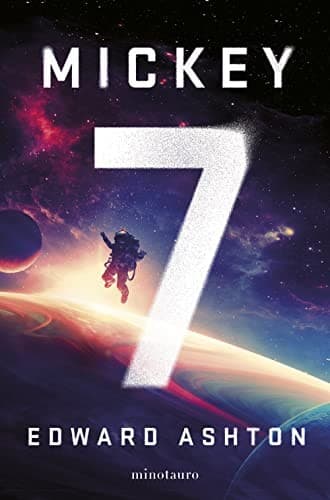
Mickey7
Mal Goes to War