Edith Grossman
Also known as Edith Marion Dorph, Edie Grossman
Translating major Spanish and Latin American literary works into English brought classic twentieth-century and Golden Age masterpieces to global English-speaking audiences, including landmark renderings of Don Quixote and modern fiction. Edith Grossman was an American literary translator whose English versions elevated the visibility and critical standing of literary translation in modern publishing.
Through her renderings of complex narrative voices, she expanded access to major Spanish-language literature, enabling English readers to experience pivotal works of Latin American fiction alongside early modern European literature.
Career & Background
Born Edith Marion Dorph in Philadelphia, Pennsylvania, on March 22, 1936, Grossman pursued her interest in Spanish literature at the University of Pennsylvania, where she earned her bachelor's degree in 1957 and her master's degree in 1959. She published her first translation—a poem by Spanish writer Juan Ramón Jiménez—in her university's literary magazine. Grossman continued her studies at the University of California, Berkeley, and spent 1962 studying in Spain on a Fulbright scholarship before earning her PhD in Latin American studies from New York University.
Grossman began translating professionally in 1972 while working in academia, eventually transitioning to full-time literary translation in 1990. Over her five-decade career based in New York City, she translated works by prominent Spanish-language authors including Gabriel García Márquez, Mario Vargas Llosa, Carlos Fuentes, Mayra Montero, Augusto Monterroso, Jaime Manrique, Julián Ríos, Álvaro Mutis, and Sor Juana Inés de la Cruz. Her work earned numerous accolades, including the PEN/Ralph Manheim Medal for Translation, the 2022 Thornton Wilder Prize for Translation, the Queen Sofía Translation Prize, an Award in Literature from the American Academy of Arts and Letters, and fellowships from the Guggenheim and Woodrow Wilson foundations.
Writing Style & Themes
Grossman approached translation as an act of artistic re-creation that required deep empathy with the author's original rhythm, tone, and sentence structure. Rather than performing a literal word-for-word substitution, she advocated for capturing the underlying voice and emotional resonance of the source text so that English readers could experience the work with equivalent literary depth.
In addition to her translation practice, Grossman advocated for the recognition of translators within the publishing ecosystem. She frequently spoke and wrote about the critical role translators play as primary creative agents who shape how international literature is received and understood across cultural boundaries.
Major Works
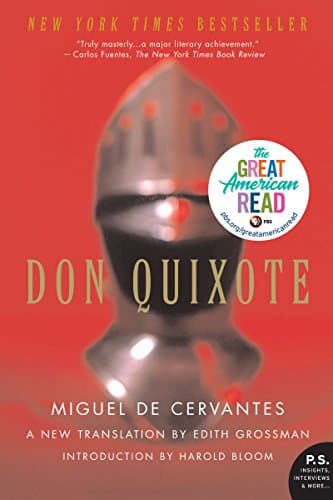
- Don Quixote — Grossman's translation of Miguel de Cervantes's Golden Age masterpiece presented the classic novel in accessible English while retaining the comedic timing, elevated prose, and structural nuance of the original text.
- Love in the Time of Cholera — Her celebrated English translation of Gabriel García Márquez's novel faithfully preserved the author's ornate prose style and romantic scope, establishing her long-standing collaboration with the Nobel Prize-winning writer.
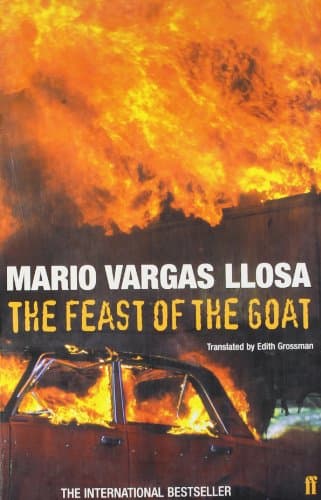
- The Feast of the Goat — Grossman translated Mario Vargas Llosa's historical novel about the dictatorship of Rafael Trujillo in the Dominican Republic, rendering Vargas Llosa's multi-layered narrative and political tension into crisp English.

Love in the Time of Cholera
Don Quixote