EC
§Author· 1 book
Ed Catmull
Also known as Edwin Catmull, Edwin Earl Catmull, Edwin E. Catmull
The development of 3D computer graphics and animated feature filmmaking was reshaped through management principles and technical innovation detailed in Creativity, Inc.: Overcoming the Unseen Forces That Stand in the Way of True Inspiration. Computer scientist and former Pixar president Ed Catmull co-authored this landmark leadership text to share insights from building a studio responsible for films beginning with Toy Story. The book examines how creative organizations can foster candid communication, overcome hidden cultural barriers, and balance technical rigor with artistic freedom.
Career & Background
Born in West Virginia on March 31, 1945, Catmull grew up in Utah before pursuing his doctoral studies in computer science at the University of Utah under graphics pioneer Ivan Sutherland. After conducting early research in 3D graphics, he directed the Computer Graphics Lab at the New York Institute of Technology before being hired by George Lucas in 1979 to lead the computer division at Lucasfilm Ltd. In 1986, Catmull co-founded Pixar Animation Studios, where he served as president for 33 years while also leading Walt Disney Animation Studios as president for 13 years following Disney's acquisition of Pixar.
Throughout his career, Catmull earned widespread distinction for fundamental conceptual and technical breakthroughs in computer animation. He received five Academy Awards, including Scientific and Engineering Awards and the Gordon E. Sawyer Award in 2009, alongside the 2019 ACM A.M. Turing Award shared with Pat Hanrahan for revolutionary impacts on 3D computer graphics and filmmaking.
Writing Style & Themes
In Creativity, Inc.: Overcoming the Unseen Forces That Stand in the Way of True Inspiration, Catmull writes with an analytical yet pragmatic voice that draws directly from decades of executive experience in high-stakes creative environments. His writing focuses on dismantling organizational fear, encouraging psychological safety, and protecting early-stage creative ideas from premature judgment. Rather than offering rigid corporate prescriptions, Catmull emphasizes peer review processes—such as Pixar's Braintrust—and continuous self-reflection to sustain institutional creativity.
Major Works
- Creativity, Inc.: Overcoming the Unseen Forces That Stand in the Way of True Inspiration — Co-authored with Amy Wallace and published in 2014, this non-fiction book explores organizational leadership, management dynamics, and creative problem-solving drawn from Catmull's executive tenure at Pixar and Walt Disney Animation Studios.
§All Books
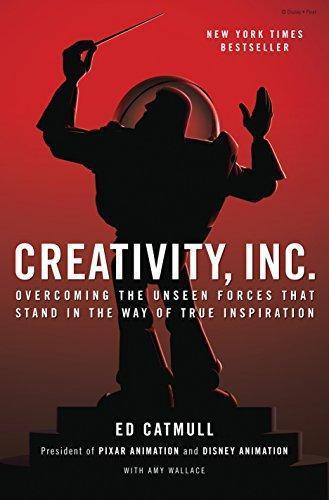
Creativity, Inc.: Overcoming the Unseen Forces That Stand in the Way of True Inspiration
Ed Catmull, 2001
247 ratings
§ About Ed Catmull's books
- Books on SansFiction
- 1
- Published
- 2001
- Average rating
- 4.3 / 5 across 247 ratings
- Genres
- Business & Economics, Business Development, Creativity, Development
The book: Creativity, Inc.: Overcoming the Unseen Forces That Stand in the Way of True Inspiration (2001)
Creativity, Inc. is a book for managers who want to lead their employees to new heights, a manual for anyone who strives for originality, and the first-ever, all-access trip into the nerve center of Pixar Animation—into the meetings, postmortems, and “Braintrust” sessions where some of the most successful films in history are made.
Common questions about Ed Catmull
- Who is Ed Catmull?
- Born in West Virginia on March 31, 1945, Catmull grew up in Utah before pursuing his doctoral studies in computer science at the University of Utah under graphics pioneer Ivan Sutherland. After conducting early research in 3D graphics, he directed the Computer Graphics Lab at the New York Institute of Technology before being hired by George Lucas in 1979 to lead the computer division at Lucasfilm Ltd.
- What is Ed Catmull best known for?
- Ed Catmull is best known for Creativity, Inc.: Overcoming the Unseen Forces That Stand in the Way of True Inspiration, published in 2001 with 247 ratings and a 4.3 average. It is the most-rated of Ed Catmull's books on SansFiction.
- What genres does Ed Catmull write?
- Ed Catmull's books on SansFiction are tagged Business & Economics, Business Development, Creativity and Development.
Explore: Business & Economics · Business Development · Creativity · Development