David Eddings
Also known as David Carroll Eddings
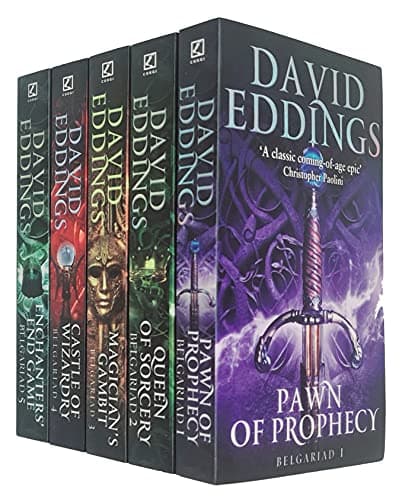
The multi-volume epic fantasy series The Belgariad helped define late-twentieth-century high fantasy through classic quest narratives, distinct character ensembles, and expansive world-building. David Eddings entered the fantasy genre in 1982 with the publication of Pawn of Prophecy, launching a five-book saga that became an international bestseller. Writing in close collaboration with his wife, Leigh Eddings, he constructed intricate imaginary worlds driven by ancient prophecies and gods involved in cosmic struggles.
Career & Background
Born in Spokane, Washington in 1931 and raised near Seattle, David Carroll Eddings earned his bachelor's degree from Reed College in 1954 and a master's degree from the University of Washington. Before turning to full-time fiction writing, he served in the United States Army, worked as a buyer for the Boeing Company, and taught college-level English. He initially published a contemporary adventure novel before transitioning to epic fantasy. Beginning with Pawn of Prophecy and the rest of The Belgariad between 1982 and 1984, Eddings established a prolific career that yielded more than two dozen novels.
Although Leigh Eddings collaborated on all of his projects, early publisher Lester del Rey believed single-author attributions performed better commercially, leading to books initially being published under David's name alone. Leigh received official co-author credit starting with Belgarath the Sorcerer in 1995. Together, the pair expanded their fictional universe with The Malloreon (1987–1991), The Elenium (1989–1991), The Tamuli (1992–1994), and The Dreamers (2003–2006) series before David Eddings passed away in Carson City, Nevada in 2009.
Writing Style & Themes
Eddings drew heavily on his background in English literature and classic storytelling, hoping his fast-paced heroic narratives would encourage younger audiences to discover classical works such as Homer and Milton. His stories favored expansive, multi-volume long fiction rather than short stories, focusing on archetypal quest structures where young, unwitting protagonists are drawn into ancient prophecies. His work is characterized by witty character banter, distinct ensemble casts, and straightforward moral conflicts between light and dark forces across vast fantasy realms.
Major Works
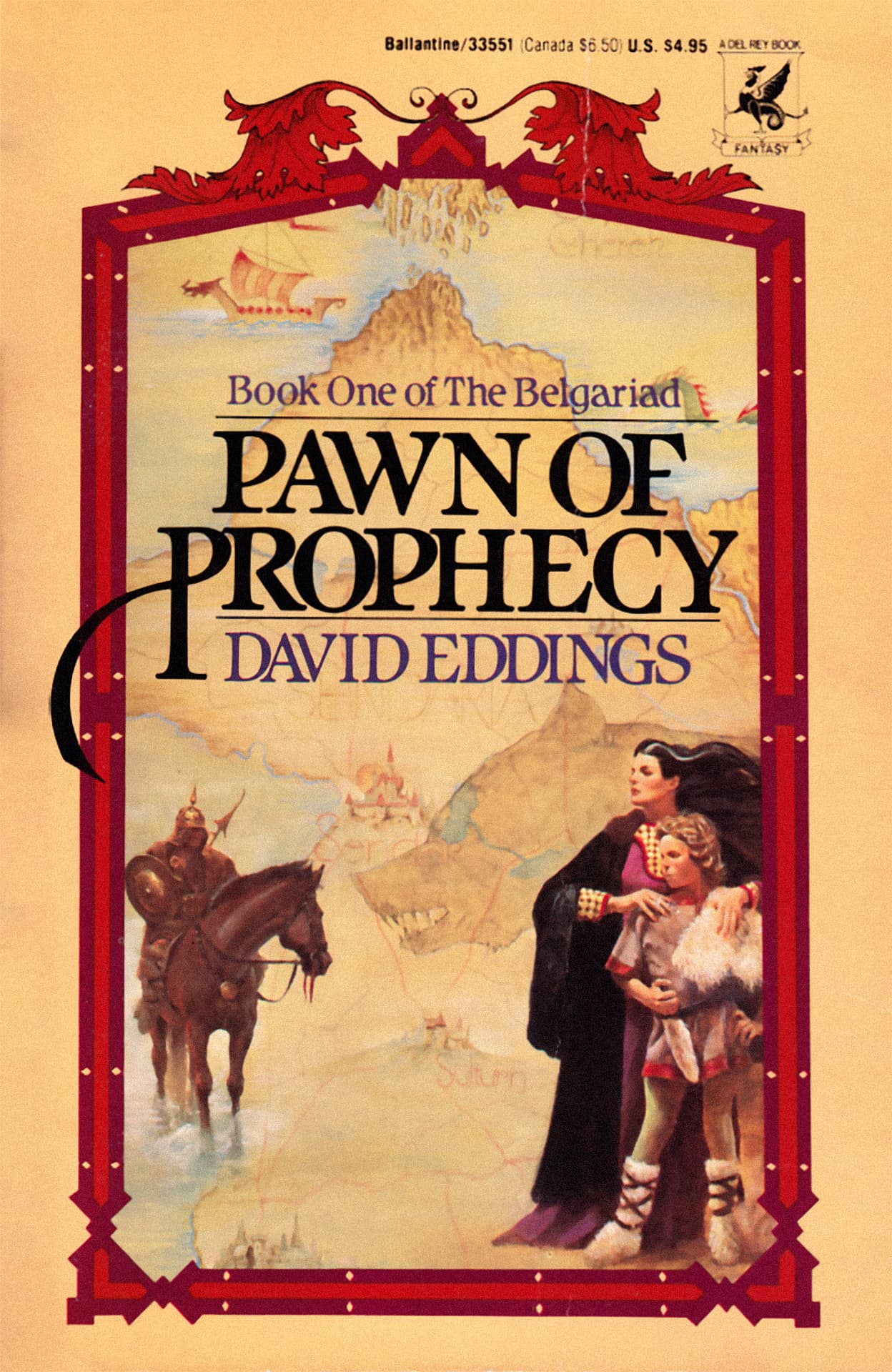
- Pawn of Prophecy — Published in 1982, this opening installment of The Belgariad introduces the young farm boy Garion as he embarks on an epic quest following the theft of a sacred orb.
- The Belgariad — A five-novel high fantasy sequence spanning 1982 to 1984 that follows Garion and his companions across ancient lands to fulfill an overarching prophecy.
- The Malloreon — A five-book sequel series published between 1987 and 1991 that continues the adventures of Garion and his companions into eastern continents.
- The Elenium — A fantasy trilogy published from 1989 to 1991 featuring the knight Sparhawk on a quest to save his queen and kingdom.
- The Tamuli — A follow-up trilogy to The Elenium, published between 1992 and 1994, expanding Sparhawk's story across a neighboring empire.
- Belgarath the Sorcerer — A 1995 prequel novel to The Belgariad that officially marked the first time Leigh Eddings was credited as co-author alongside David Eddings.
Pawn of Prophecy