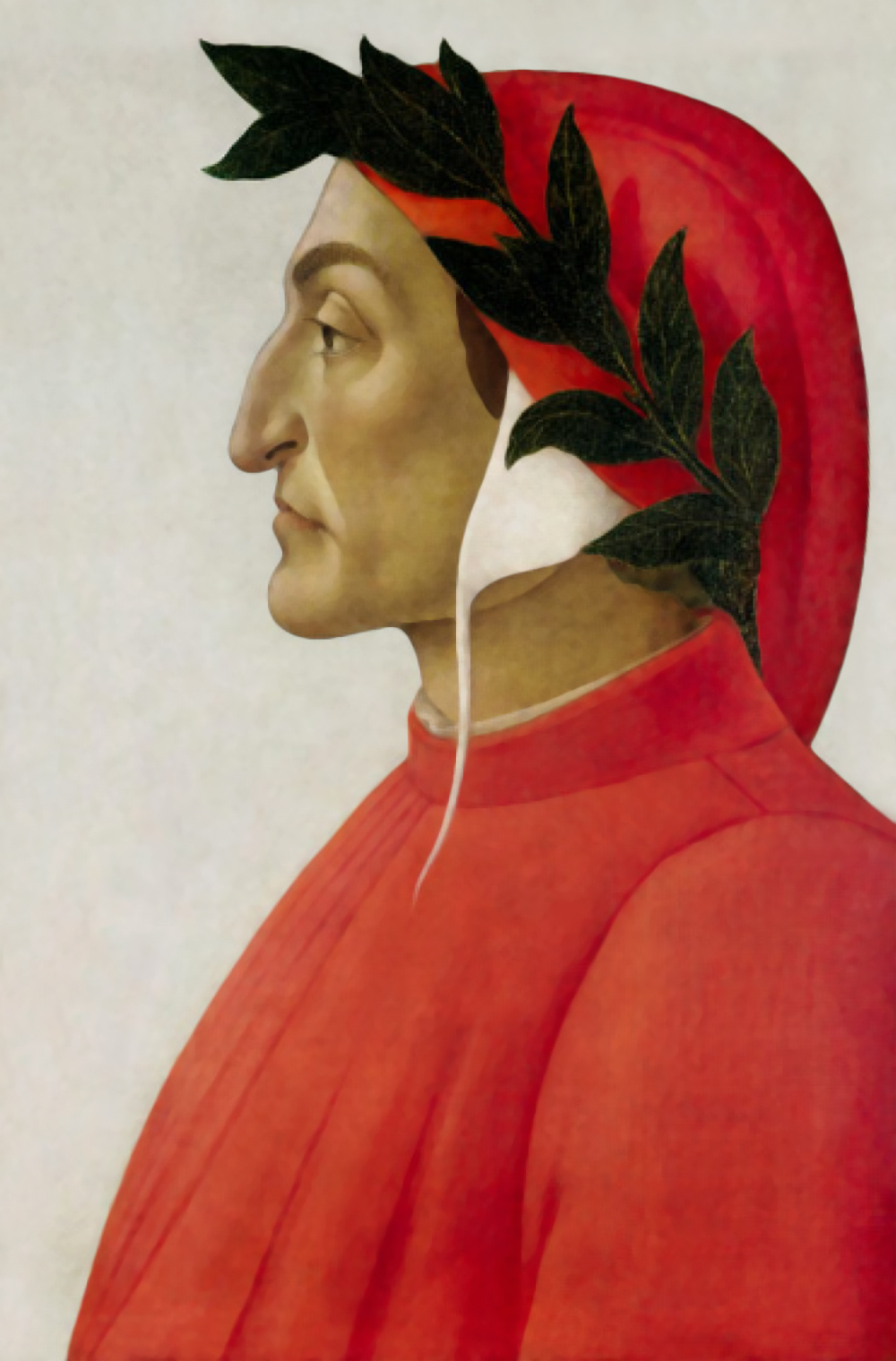
§Author· 2 books
Dante Alighieri
Also known as Durante di Alighiero degli Alighieri, Dante, Durante Alighieri
The medieval Italian literary tradition was profoundly reshaped by an epic three-part allegorical narrative that envisions a journey through the afterlife. Written in the early fourteenth century, The Divine Comedy established vernacular Italian as a major literary language and remains a foundational text of Western literature. Its author, Dante Alighieri, drew upon his deep engagement with classical philosophy, Christian theology, and contemporary Florentine politics to craft a sweeping vision of human morality and divine justice.
Career & Background
Born Durante di Alighiero degli Alighieri in Florence around May or June 1265, the poet was the son of Alighiero di Bellincione Alighieri and his wife Bella. According to the author's son, Jacopo Alighieri, the familiar name Dante originated as a hypocorism for Durante. In contemporary legal documents, the family name appeared under patronymic forms such as Alagherii or de Alagheriis, while the humanist writer Giovanni Boccaccio later popularized the spelling Alighieri. Raised in a Florentine family of minor nobility affiliated with the Guelph political faction, Dante received a classical education in grammar, language, and rhetoric, becoming one of the most learned lay intellectuals of his era.
Dante became deeply involved in Florentine political life during a period of intense factional conflict between the Guelphs and Ghibellines, as well as internal divisions within the Guelph party itself. In 1302, political rivalries led to his permanent banishment and exile from Florence under penalty of death. Forced into difficult peregrinations across northern Italy, he found refuge in noble households in cities such as Verona and Ravenna. Despite the hardship of exile, this tumultuous period proved remarkably productive, during which he composed extensive philosophical treatises and worked continuously on his epic poetic masterpiece until his death in Ravenna on September 14, 1321.
Writing Style & Themes
Dante wrote The Divine Comedy in terza rima, a complex rhyming verse scheme of interlocking three-line stanzas that he invented for the poem. Departing from the prevailing convention of composing serious literary works exclusively in Latin, he chose the Tuscan vernacular, arguing in his scholarly writings that the spoken language of the people possessed the capacity for elevated artistic expression. His poetry combines vivid physical descriptions, historical portraiture, scholastic theology, and deep philosophical inquiries into moral responsibility, free will, and spiritual redemption.
Throughout his writings, Dante seamlessly merged personal experience with universal themes of justice, salvation, and civic ethics. His epic structure presents an encyclopedic synthesis of medieval knowledge, populating the afterlife with biblical figures, classical mythological characters, ancient philosophers, and contemporary Italian political figures. By placing historical acquaintances alongside legendary heroes, Dante turned his personal exile and political disillusionment into a timeless reflection on human vice and virtue.
Major Works
- The Divine Comedy — An epic poem originally titled Comedìa and later given the epithet Divina by Giovanni Boccaccio. Divided into three realm-focused sections—Inferno, Purgatorio, and Paradiso—it follows a traveler guided through Hell, Purgatory, and Heaven to explore the medieval worldview, theology, and human morality.
- Inferno — The widely read opening canticle of The Divine Comedy, in which the protagonist is guided by the Roman poet Virgil through nine concentric circles of torment beneath the Earth, encountering condemned souls punished in accordance with their earthly sins.
§All Books

The Divine Comedy
Dante Alighieri, 1320
194 ratings

Inferno
Dante Alighieri, 1320
184 ratings
§ About Dante Alighieri's books
- Books on SansFiction
- 2
- Published
- 1320
- Average rating
- 3.9 / 5 across 378 ratings
- Genres
- General, History, Literature, Italian Poetry
- Series
- La Divina Commedia
Start here: The Divine Comedy (1320)
The Divine Comedy (Italian: Divina Commedia) is an epic poem by Dante Alighieri, begun c. 1308 and completed 1320, a year before his death in 1321. It is widely considered the preeminent work of Italian literature[1] and is seen as one of the greatest works of world literature.[2] The poem's imaginative vision of the afterlife is representative of the…
La Divina Commedia: reading order
Common questions about Dante Alighieri
- Who is Dante Alighieri?
- Born Durante di Alighiero degli Alighieri in Florence around May or June 1265, the poet was the son of Alighiero di Bellincione Alighieri and his wife Bella. According to the author's son, Jacopo Alighieri, the familiar name Dante originated as a hypocorism for Durante.
- What is Dante Alighieri best known for?
- Dante Alighieri is best known for The Divine Comedy, published in 1320 with 194 ratings and a 3.9 average. It is the most-rated of Dante Alighieri's books on SansFiction.
- How many books has Dante Alighieri written?
- SansFiction lists 2 books by Dante Alighieri, published in 1320. The most popular are The Divine Comedy and Inferno.
- What order should I read Dante Alighieri's La Divina Commedia books in?
- Read the La Divina Commedia books in series order: 1. The Divine Comedy, 1. Inferno.
- What genres does Dante Alighieri write?
- Dante Alighieri's books on SansFiction are tagged General, History, Literature and Italian Poetry.
Explore: General · History · Literature · Italian Poetry