CG
§Author· 1 book
Curt Gentry
Also known as Curtis Marsena Gentry
Investigative true crime and historical non-fiction reached a watershed moment with the publication of Helter Skelter: The True Story of the Manson Murders, a meticulous account of the 1969 Tate-LaBianca killings that became one of the best-selling true crime books in publishing history. Curt Gentry, an established journalist and historian, co-authored the blockbuster account alongside prosecutor Vincent Bugliosi, translating massive court records and investigative files into a driving narrative.
Beyond his famous collaboration on the Manson case, Gentry built a distinguished career as a chronicler of American political history, regional culture, and high-profile judicial miscarriages. His exhaustive biographies and investigative histories brought clarity to complex institutional records and controversial public figures.
Career & Background
Born Curtis Marsena Gentry on June 13, 1931, in Lamar, Colorado, he served in the United States Air Force during the Korean War before moving to California. After graduating from San Francisco State College, Gentry immersed himself in the local book trade. He worked as head of the mail order department at Paul Elder Books from 1954 to 1957 and managed Tro Harper Books from 1957 to 1961, after which he became a full-time freelance writer.
In his early career, Gentry focused on Northern California history and regional topics, publishing The Dolphin Guide to San Francisco and the Bay Area in 1962 and The Madams of San Francisco in 1964. He earned widespread critical acclaim for his 1967 book Frame-Up: The Incredible Case of Tom Mooney and Warren Billings, an investigation into the 1916 San Francisco Preparedness Day bombing trial. Gentry later co-wrote Helter Skelter: The True Story of the Manson Murders in 1974, which won an Edgar Award in 1975, and authored the authoritative 1991 biography J. Edgar Hoover: The Man and the Secrets. He lived in San Francisco until his death on July 10, 2014, at age 83.
Writing Style & Themes
Gentry's non-fiction was defined by painstaking archival research, deep primary-source analysis, and an ability to construct narrative momentum from legal documentation. In collaborative projects, he specialized in transforming detailed prosecutorial evidence and law enforcement testimony into lucid, accessible prose without compromising factual precision.
A central theme across Gentry's work is the critical examination of American institutions, judicial overreach, and abuse of political power. Whether uncovering legal flaws in landmark criminal trials, detailing executive secrecy in his biography of J. Edgar Hoover, or exploring social anxieties in his 1968 speculative novel The Last Days of the Late, Great State of California, Gentry maintained a rigorous focus on accountability and public truth.
Major Works
- Helter Skelter: The True Story of the Manson Murders — Co-authored with prosecutor Vincent Bugliosi and published in 1974, this comprehensive account of the Charles Manson investigation and prosecution won the 1975 Edgar Award for Best Fact Crime book.
- Frame-Up: The Incredible Case of Tom Mooney and Warren Billings — Published in 1967, this investigative history re-examines the 1916 San Francisco Preparedness Day bombing, highlighting evidence tampering and legal misconduct.
- J. Edgar Hoover: The Man and the Secrets — A detailed 1991 biography tracing the career, political influence, and private intelligence files of the long-serving FBI director.
- The Last Days of the Late, Great State of California — A 1968 novel combining social satire and speculative fiction to analyze California's political and environmental culture through a fictional disaster.
- The Madams of San Francisco: An Irreverent History of the City by the Golden Gate — A 1964 historical chronicle documenting the social impact and business of San Francisco's prominent brothel keepers during the nineteenth and early twentieth centuries.
§All Books
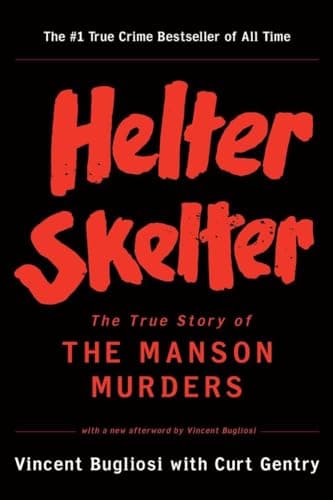
Helter Skelter: The True Story of the Manson Murders
Vincent Bugliosi, 1974
114 ratings