
§Author· 2 books
Cass R. Sunstein
Also known as Cass Robert Sunstein
Behavioral economics and legal theory intersect to explain how subtle shifts in choices, policy design, and administrative decision-making impact everyday human lives. Cass R. Sunstein has shaped public understanding of choice architecture and regulatory policy through landmark publications such as Nudge: Improving Decisions About Health, Wealth and Happiness, co-authored with Richard H. Thaler. His interdisciplinary work explores how institutions can guide better decision-making without restricting individual freedom, bridging academic rigor and practical governance.
Career & Background
Born in September 1954 in Salem, Massachusetts, Sunstein attended Harvard University, where he served as an editor of the Harvard Lampoon. He built a distinguished academic career as a professor at the University of Chicago Law School from 1981 to 2008 before joining Harvard Law School, where he serves as the Robert Walmsley University Professor. At Harvard, Sunstein founded and directs the Program on Behavioral Economics and Public Policy, and co-directs the Initiative on Artificial Intelligence and the Law. From 2009 to 2012, he served as Administrator of the White House Office of Information and Regulatory Affairs in the Obama administration. In 2018, he received the Holberg Prize from Norway for his scholarship, and in 2020, the World Health Organization appointed him Chair of its technical advisory group on Behavioral Insights and Sciences for Health.
Writing Style & Themes
Sunstein's writing synthesizes constitutional law, administrative regulation, behavioral economics, and cognitive science into accessible, policy-relevant analysis. A primary theme throughout his scholarship is choice architecture—the concept that decision environments can be structured to encourage better choices regarding health, wealth, and welfare while preserving freedom of choice, an approach termed libertarian paternalism. His work also focuses on judicial minimalism, administrative cost-benefit analysis, regulatory efficiency, and the cognitive biases or systemic errors that degrade human judgment, including unwanted variability in decision-making.
Major Works
- Nudge: Improving Decisions About Health, Wealth and Happiness — Co-authored with Richard H. Thaler, this influential work introduces choice architecture and libertarian paternalism, detailing how small interventions and default rules can help people make better decisions in finance, health, and daily life.
- Noise: A Flaw in Human Judgment — Co-authored to examine systemic variability in human decision-making, this study analyzes how chance factors and inconsistency impair judgments across law, medicine, and public policy, offering practical strategies to audit and reduce unwanted error.
- The World According to Star Wars — A New York Times bestselling book that uses the iconic film saga to illuminate legal theory, constitutional interpretation, social change, and human behavior.
- The Cost-Benefit Revolution — Published by the MIT Press, this book outlines how regulatory agencies use quantitative cost-benefit analysis and empirical evidence to design efficient administrative rules.
§All Books

Nudge: Improving Decisions About Health, Wealth and Happiness
Richard H. Thaler, 2008
160 ratings
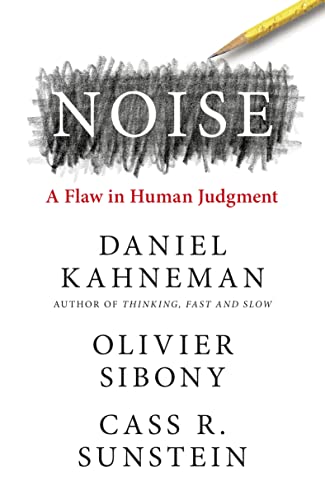
Noise: A Flaw in Human Judgment
Daniel Kahneman, 2021
43 ratings
§ About Cass R. Sunstein's books
- Books on SansFiction
- 2
- Published
- 2008–2021
- Average rating
- 3.6 / 5 across 203 ratings
- Genres
- Psychology, Business & Economics, Choice (Psychology), General
Start here: Nudge: Improving Decisions About Health, Wealth and Happiness (2008)
GetAbstract Summary: Get the key points from this book in less than 10 minutes. In this lovely, useful book, Richard Thaler and Cass Sunstein examine choices, biases and the limits of human reasoning from a variety of perspectives. They often amuse by disclosing how they have fallen victim to the limitations of thought that they are describing.
Common questions about Cass R. Sunstein
- Who is Cass R. Sunstein?
- Born in September 1954 in Salem, Massachusetts, Sunstein attended Harvard University, where he served as an editor of the Harvard Lampoon. He built a distinguished academic career as a professor at the University of Chicago Law School from 1981 to 2008 before joining Harvard Law School, where he serves as the Robert Walmsley University Professor.
- What is Cass R. Sunstein best known for?
- Cass R. Sunstein is best known for Nudge: Improving Decisions About Health, Wealth and Happiness, published in 2008 with 160 ratings and a 3.6 average. It is the most-rated of Cass R. Sunstein's books on SansFiction.
- How many books has Cass R. Sunstein written?
- SansFiction lists 2 books by Cass R. Sunstein, published between 2008 and 2021. The most popular are Nudge: Improving Decisions About Health, Wealth and Happiness and Noise: A Flaw in Human Judgment.
- Which Cass R. Sunstein book should I read first?
- Nudge: Improving Decisions About Health, Wealth and Happiness is the usual place to start: it is Cass R. Sunstein's most-rated book here, with a 3.6 average.
- What genres does Cass R. Sunstein write?
- Cass R. Sunstein's books on SansFiction are tagged Psychology, Business & Economics, Choice (Psychology) and General.
Explore: Psychology · Business & Economics · Choice (Psychology) · General