
§Author· 1 book
Carol S. Dweck
Also known as Carol Susan Dweck, Carol Dweck
Research in developmental and social psychology has fundamentally reshaped how educators, leaders, and individuals approach achievement and human potential, largely through the framework presented in Mindset:The New Psychology of Success. Carol S. Dweck developed this theoretical model to demonstrate how implicit beliefs regarding individual abilities directly influence behavior, goal setting, and resilience in the face of failure.
By contrasting fixed mindsets—the view that intelligence and talent are unchangeable traits—with growth mindsets—the understanding that cognitive capacities and skills can be expanded through deliberate practice and effort—her work provides practical strategies for fostering sustained motivation across diverse educational and professional environments.
Career & Background
Carol Susan Dweck was born on October 17, 1946. She completed her undergraduate studies at Barnard College, Columbia University, earning a Bachelor of Arts in Psychology in 1967, and went on to obtain her Ph.D. in Psychology from Yale University in 1972. She subsequently served on the psychology faculties of the University of Illinois, the Laboratory of Human Development at Harvard University, and Columbia University, where she was appointed the William B. Ransford Professor of Psychology. In 2004, she joined Stanford University as the Lewis and Virginia Eaton Professor of Psychology.
Dweck's empirical contributions to personality and developmental research earned her election to the National Academy of Sciences in 2012. Her professional honors from the Association for Psychological Science include being named a James McKeen Cattell Fellow in 2013, receiving an APS Mentor Award in 2019, and being honored as an APS William James Fellow in 2020.
Writing Style & Themes
Dweck's published work bridges developmental, social, and personality psychology, maintaining a strong focus on empirical research while remaining accessible to broader audiences. Her primary analytical theme centers on self-conceptions and implicit self-theories, examining how people structure identity to guide motivation and self-regulation.
Her research frequently highlights the impact of praise on child development and academic outcomes. Dweck's findings show that praising innate intelligence promotes vulnerability to setbacks, whereas praising process, effort, and strategy encourages constructive responses to challenge and supports long-term achievement.
Major Works
- Mindset:The New Psychology of Success — Published in 2006, this influential book translates decades of psychological research into actionable principles for personal development, parenting, business leadership, and education by contrasting fixed and growth mindsets.
- Self-theories: Their Role in Motivation, Personality and Development — Published in 1999, this academic volume synthesizes Dweck's foundational studies on implicit beliefs, exploring how individuals' theories about their own attributes shape motivation and personality over time.
§All Books
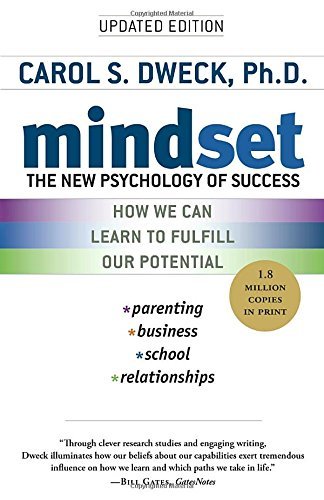
Mindset:The New Psychology of Success
Carol S. Dweck, 2006
175 ratings
§ About Carol S. Dweck's books
- Books on SansFiction
- 1
- Published
- 2006
- Average rating
- 3.9 / 5 across 175 ratings
- Genres
- Belief And Doubt, Nonfiction, Psychology
The book: Mindset:The New Psychology of Success (2006)
After decades of research, world-renowned Stanford University psychologist Carol S. Dweck, Ph.D., discovered a simple but groundbreaking idea: the power of mindset.
Common questions about Carol S. Dweck
- Who is Carol S. Dweck?
- Carol Susan Dweck was born on October 17, 1946. She completed her undergraduate studies at Barnard College, Columbia University, earning a Bachelor of Arts in Psychology in 1967, and went on to obtain her Ph.D. in Psychology from Yale University in 1972.
- What is Carol S. Dweck best known for?
- Carol S. Dweck is best known for Mindset:The New Psychology of Success, published in 2006 with 175 ratings and a 3.9 average. It is the most-rated of Carol S. Dweck's books on SansFiction.
- What genres does Carol S. Dweck write?
- Carol S. Dweck's books on SansFiction are tagged Belief And Doubt, Nonfiction and Psychology.
Explore: Belief And Doubt · Nonfiction · Psychology