Blake Masters
Also known as Blake Gates Masters, Blake G. Masters
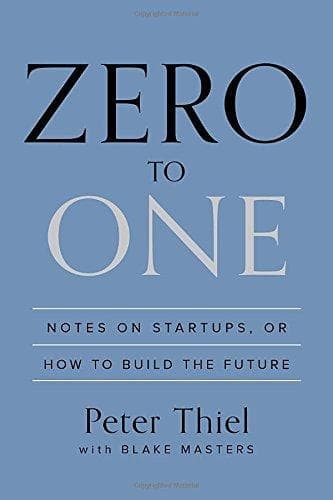
Analyses of technology entrepreneurship and venture capital often highlight the principles behind building innovative companies that create entirely new markets rather than competing in existing ones. Co-authored with investor Peter Thiel, the bestselling book Zero to One: Notes on Startups, or How to Build the Future originated as a detailed series of class notes taken by Blake Masters during Thiel's 2012 course at Stanford Law School. Masters helped synthesize complex startup philosophies into a practical framework that became a widely read business guide.
Beyond co-writing one of the prominent business texts of the 2010s, Masters has worked extensively within Silicon Valley as an executive and venture capitalist. His writing and commentary reflect a distinct focus on technological progress, contrarian thinking, and the economic dynamics of modern innovation.
Career & Background
Born Blake Gates Masters in Denver, Colorado, in 1986, Masters grew up in Tucson, Arizona, as the son of Scott Masters, a software worker, and Marilyn Masters, who managed a tutoring center. He attended Stanford University, earning a Bachelor of Arts degree in 2009, followed by a Juris Doctor from Stanford Law School in 2012. While taking a course taught by PayPal co-founder and venture capitalist Peter Thiel in 2012, Masters published detailed notes online summarizing Thiel's lectures on startup strategy, technology, and economic monopolies. The notes gained widespread attention across the technology industry and ultimately served as the foundation for their 2014 co-authored book, Zero to One: Notes on Startups, or How to Build the Future.
Following law school, Masters established a career in venture capital and organizational leadership. He served as Chief Operating Officer of Thiel Capital, an investment firm based in Silicon Valley, and as President of the Thiel Foundation, where he oversaw initiatives such as the Thiel Fellowship. In addition to his corporate and philanthropic leadership, Masters entered public politics, serving as the Republican nominee for the United States Senate in Arizona in 2022. He has also served on the board of directors for organizations such as the American Principles Project.
Writing Style & Themes
The core theme of Masters's work in Zero to One: Notes on Startups, or How to Build the Future centers on vertical progress, defined as creating transformative new technology rather than duplicating existing models. The writing emphasizes contrarian thinking, questioning consensus opinions, and identifying valuable truths that few people agree with. Rather than relying on standard management formulas, the perspective presented advocates for strong vision, long-term planning, and building durable monopolies through proprietary technology, network effects, scale, and branding.
In terms of tone and presentation, the prose is characterized by rational, practical arguments and concise, structured exposition. Masters distilled complex economic and philosophical lectures into accessible insights, structuring ideas around direct questions about competitive advantage, market creation, and the future of technological progress. The resulting text balances strategic business analysis with broad observations on technology's role in global development.
Major Works
- Zero to One: Notes on Startups, or How to Build the Future — Co-authored with Peter Thiel and published in 2014, this bestselling business book grew out of class notes taken by Masters during Thiel's 2012 startup course at Stanford Law School. The work explores secrets, monopoly dynamics, vertical innovation, and practical strategies for founding groundbreaking technology companies.