Bessel van der Kolk
Also known as Bessel A. van der Kolk, Bessel van der Kolk MD, Bessel A. Van der Kolk
The study and treatment of psychological trauma underwent a profound transformation through research integrating neuroscience, attachment theory, and somatic therapies, bringing body-centered recovery to the forefront of psychiatric medicine. Psychiatrist and author Bessel van der Kolk established himself as a leading investigator in trauma studies, examining how overwhelming stress alters brain function, memory processing, and physiological regulation.
Career & Background
Born in the Netherlands on July 8, 1943, van der Kolk later established his clinical practice and academic career in Boston, Massachusetts. Since the 1970s, his research has focused on post-traumatic stress and developmental trauma. In 1984, he set up one of the first clinical research centers in the United States dedicated to the study and treatment of traumatic stress in civilian populations. Over his career, he conducted pioneering studies on the effects of SSRIs on PTSD, led early neuroimaging research investigating how trauma alters brain processes, and examined the connections between borderline personality disorder, trauma, and self-injury.
Van der Kolk has served as professor of psychiatry at Boston University School of Medicine, president of the International Society for Traumatic Stress Studies, co-director of the National Child Traumatic Stress Network, and president of the Trauma Research Foundation in Brookline, Massachusetts. He has also served as principal investigator for clinical trial research into MDMA-assisted psychotherapy for post-traumatic stress disorder.
Writing Style & Themes
Van der Kolk's writing style combines clinical neuroscience, attachment theory, and detailed case histories to make complex psychiatric concepts accessible to clinicians and general readers alike. A core theme across his work is that traumatic experiences are stored not simply as verbal narratives, but as physiological, visceral responses in the body and nervous system. He demonstrates that traumatic memory differs fundamentally from ordinary conscious memory, manifesting through physical distress, hyperarousal, and emotional numbing.
His work emphasizes neuroplasticity and the capacity of the brain and body to heal from chronic stress. Moving beyond traditional talk therapy alone, van der Kolk advocates for integrative treatments such as somatic experiencing, yoga, neurofeedback, Eye Movement Desensitization and Reprocessing (EMDR), and theater, which help individuals regain sensory awareness, emotional regulation, and agency.
Major Works
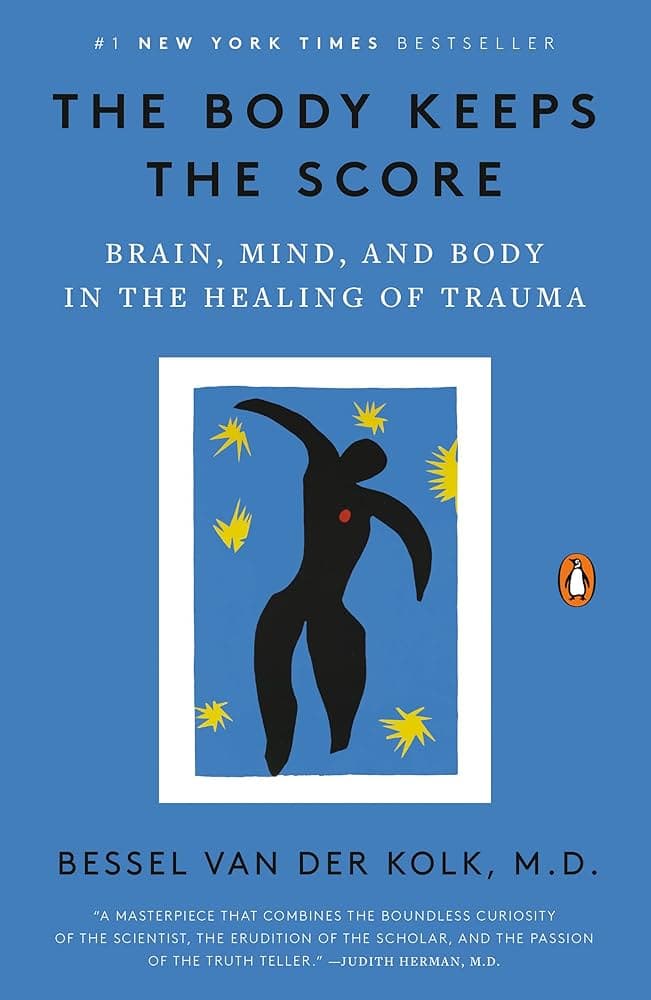
- The Body Keeps the Score: Brain, Mind, and Body in the Healing of Trauma — Published in 2014, this groundbreaking nonfiction book synthesizes neuroscience, attachment research, and body-oriented therapies to explain how trauma reshapes the brain and body, offering evidence-based approaches to recovery.
- Traumatic Stress: The Effects of Overwhelming Experience on Mind, Body, and Society — Co-edited with Alexander C. McFarlane and Lars Weisaeth, this academic text presents a comprehensive overview of the psychobiology, developmental impacts, and social dimensions of post-traumatic stress disorder.