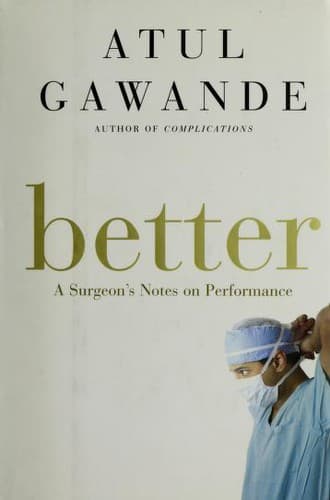
Atul Gawande
Also known as Atul Atmaram Gawande, Atul A. Gawande
Medical non-fiction that addresses systemic safety, human fallibility, and end-of-life care has transformed public understanding of modern healthcare, as demonstrated by books such as The Checklist Manifesto: How to Get Things Right. Atul Gawande, MD, MPH, is an American surgeon, writer, and public health researcher whose books and articles explore how complex institutions can systematically improve clinical outcomes.
Career & Background
Born on November 5, 1965, in Brooklyn, New York, to physician parents, Gawande earned his B.A.S. from Stanford University in 1987 and an M.A. from Balliol College, Oxford, in 1989. He went on to receive his M.D. from Harvard Medical School in 1995 and his M.P.H. from the Harvard School of Public Health in 1999. For more than two decades, he has practiced general and endocrine surgery at Brigham and Women's Hospital in Boston, Massachusetts, where he holds the John and Cyndy Fish Chair in Surgery. He serves as the Samuel O. Thier Professor of Surgery at Harvard Medical School and as a Professor in the Department of Health Policy and Management at the Harvard T.H. Chan School of Public Health.
In addition to his clinical practice and teaching roles, Gawande has been a longtime staff writer for The New Yorker magazine. He co-founded Ariadne Labs, a joint center for health systems innovation operated by Brigham and Women's Hospital and the Harvard T.H. Chan School of Public Health, serving as its Executive Director and later as Distinguished Professor in Residence. He also served as Chairman of Lifebox, a nonprofit organization dedicated to making surgery safer globally. From 2018 to 2020, Gawande served as Chief Executive Officer of Haven, the healthcare venture created by Amazon, Berkshire Hathaway, and JPMorgan Chase. From January 2022 to January 2025, he served as Assistant Administrator for Global Health at the United States Agency for International Development (USAID).
Writing Style & Themes
Gawande's prose integrates first-person accounts of medical residency and surgical practice with rigorous policy analysis. His work focuses on how systems failure occurs in complex environments, how standardized checklists reduce human error, and how medical culture addresses performance and accountability. Across his essay collections and books, he evaluates the limits of medical intervention, ethical choices in high-risk procedures, and the need for patient-centered decisions during terminal illness.
Major Works
- The Checklist Manifesto: How to Get Things Right — Published in 2009, this book demonstrates how simple, standardized checklists can significantly reduce errors and improve reliability in medicine, aviation, and construction.
- Better — Published in 2007 under the subtitle A Surgeon's Notes on Performance, this work examines how healthcare professionals can maintain diligence, ethical practice, and continuous performance improvement.
- Complications: A Surgeon's Notes on an Imperfect Science — Published in 2002, Gawande's debut non-fiction collection uses experiences from his surgical residency to explore uncertainty, technical error, and unexpected outcomes in clinical practice.
- Being Mortal: Medicine and What Matters in the End — Published in 2014, this work explores end-of-life care, palliative medicine, and how modern healthcare systems can prioritize patient goals and quality of life near the end of life.
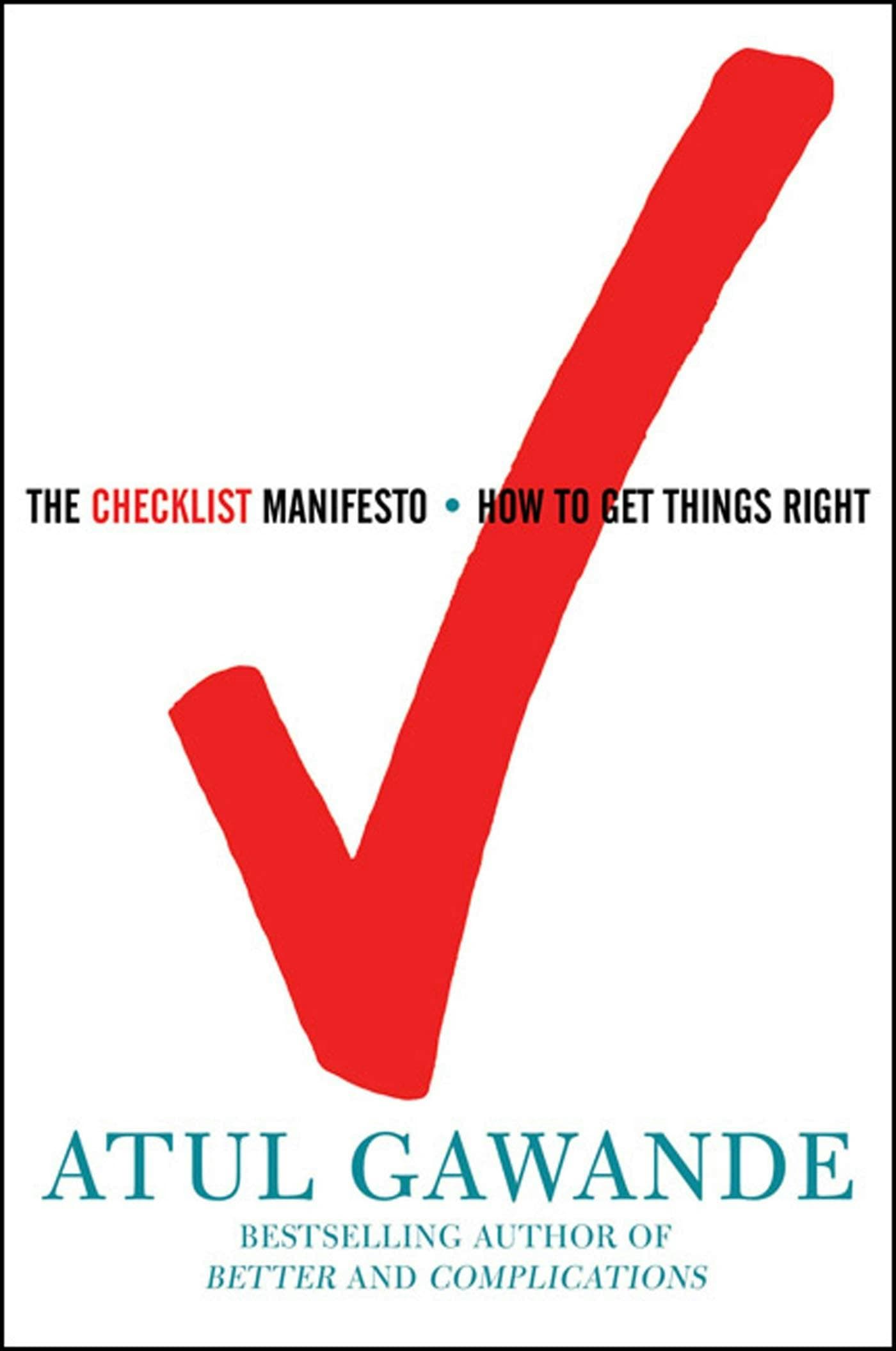
The Checklist Manifesto: How to Get Things Right