
§Author· 1 book
Art Spiegelman
Also known as Itzhak Avraham ben Zeev, Arthur Spiegelman, Itzhak Avraham ben Zeev Spiegelman
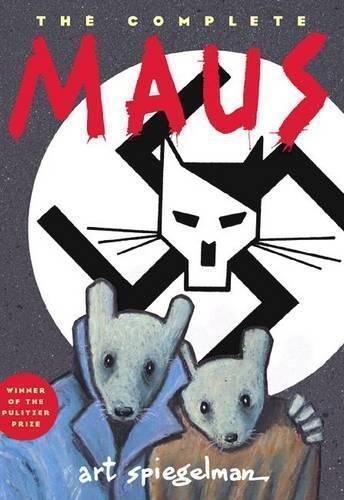
Graphic memoirs standardly balance personal history with innovative visual storytelling, a format elevated by two-volume Holocaust narratives depicting Jews as mice and Nazis as cats. Art Spiegelman, born Itzhak Avraham ben Zeev on February 15, 1948, in Stockholm, Sweden, is a New York-based comics artist, editor, and advocate for the medium of comics whose graphic work Maus earned a special Pulitzer Prize in 1992. His landmark publication The Complete Maus collects his parents' experiences surviving Polish Nazi concentration camps and their subsequent lives in America.
Career & Background
Immigrating with his parents to the United States in 1951, Spiegelman grew up in Queens, New York, where he studied cartooning influenced by the subversive humor and artwork of Mad magazine. He began his professional career at Topps Chewing Gum at age eighteen before relocating to San Francisco in the early 1970s, where he contributed to the underground comix movement and published an early iteration of Maus in Funny Aminals. After returning to New York, he married designer and editor Françoise Mouly, with whom he co-edited influential comics magazines including Arcade and Raw. Spiegelman later served as a contributing artist for The New Yorker for a decade starting in 1992, and in 2022 he received the Medal for Distinguished Contribution to American Letters from the National Book Foundation.
Writing Style & Themes
Spiegelman utilizes anthropomorphic visual metaphors alongside rigorous historical and autobiographical narrative techniques to confront themes of trauma, memory, and complex familial relationships. His experimental approach to panel design and visual layout, demonstrated in early collections like Breakdowns, challenges traditional comic formats to address complex emotional realities. Beyond his creative work, Spiegelman has consistently acted as an advocate for the medium of comics as a serious adult literary form, receiving honors such as a Guggenheim fellowship and appointment as a Chevalier de l'Ordre des Arts et des Lettres.
Major Works
- The Complete Maus — A comprehensive graphic memoir collecting Maus I: A Survivor's Tale: My Father Bleeds History (1986) and Maus II: A Survivor's Tale: And Here My Troubles Began (1991), detailing his parents' survival of the Holocaust as Polish Jews and their postwar lives in the United States.
- Breakdowns — A large-format graphic collection of Spiegelman's early experimental comics exploring autobiographical themes, personal history, and structural comic design.
§All Books
The Complete Maus
Art Spiegelman, 1980
582 ratings
§ About Art Spiegelman's books
- Books on SansFiction
- 1
- Published
- 1980
- Average rating
- 4.6 / 5 across 582 ratings
- Genres
- Biography & Autobiography, Children Of Holocaust Survivors, Classics, Comics
The book: The Complete Maus (1980)
"A brutally moving work of art—widely hailed as the greatest graphic novel ever written—Maus recounts the chilling experiences of the author’s father during the Holocaust, with Jews drawn as wide-eyed mice and Nazis as menacing cats.
Common questions about Art Spiegelman
- Who is Art Spiegelman?
- Immigrating with his parents to the United States in 1951, Spiegelman grew up in Queens, New York, where he studied cartooning influenced by the subversive humor and artwork of Mad magazine.
- What is Art Spiegelman best known for?
- Art Spiegelman is best known for The Complete Maus, published in 1980 with 582 ratings and a 4.6 average. It is the most-rated of Art Spiegelman's books on SansFiction.
- What genres does Art Spiegelman write?
- Art Spiegelman's books on SansFiction are tagged Biography & Autobiography, Children Of Holocaust Survivors, Classics and Comics.
Explore: Biography & Autobiography · Children Of Holocaust Survivors · Classics · Comics