AA
§Author· 1 book
Aravind Adiga
Contemporary fiction examining social inequality, corruption, and economic disparity in modern India reached a wide international audience through razor-sharp, darkly humorous social realism. Aravind Adiga made his literary debut with The White Tiger, a novel that captured the complex realities of class conflict through the voice of a ruthless yet resourceful protagonist.
Career & Background
Born in Madras (now Chennai) on October 23, 1974, Adiga grew up in Mangalore, India, where he attended Canara High School and St. Aloysius High School. His family later emigrated to Sydney, Australia, where he completed his secondary education at James Ruse Agricultural High School. He pursued higher education in English literature at Columbia University in New York, graduating as salutatorian in 1997, and continued his studies at Magdalen College, Oxford.
Before turning to long-form fiction, Adiga worked extensively as a journalist. His reporting on business, politics, and culture appeared in financial and international publications such as Time, the Financial Times, Money, the Wall Street Journal, the Sunday Times, the Times of India, and the New Yorker. His debut novel, The White Tiger, won the Man Booker Prize in 2008. He subsequently published the short story collection Between the Assassinations, followed by the novels Last Man in Tower in 2011, Selection Day in 2016, and Amnesty in 2020. Adiga currently resides in Mumbai, India.
Writing Style & Themes
Adiga's fiction is rooted in gritty neo-realism, social satire, and moral ambiguity. His work frequently centers on misfits, domestic servants, migrant workers, and underclass individuals navigating rigid class structures, institutional corruption, and rapid urban development in contemporary South Asia and beyond.
Technically, his prose features distinctive first-person voices, sharp dialogue, and tight narrative pacing. By examining the tensions between tradition and modern capitalism, Adiga offers unvarnished portraits of systemic inequality and the human compromises required to survive within it.
Major Works
- The White Tiger — This 2008 Man Booker Prize-winning novel is framed as a series of letters from Balram Halwai, a former servant from a poor village who recounts his journey to becoming a successful entrepreneur in Bangalore.
- Between the Assassinations — A collection of interconnected short stories set in the fictional South Indian town of Kittur, portraying diverse characters across different socio-economic backgrounds between the assassinations of Indira Gandhi and Rajiv Gandhi.
- Last Man in Tower — A 2011 novel detailing a bitter real estate conflict in Mumbai, where an elderly teacher refuses to sell his apartment to a persistent luxury housing developer.
- Selection Day — A 2016 novel exploring ambition, paternal pressure, and sexuality through the story of two brothers in Mumbai trained from childhood to become cricket stars, which was adapted into a Netflix original series.
- Amnesty — A 2020 novel following Danny, an undocumented Sri Lankan cleaner in Sydney, who must decide whether to report critical information about a murder at the risk of his own deportation.
§All Books
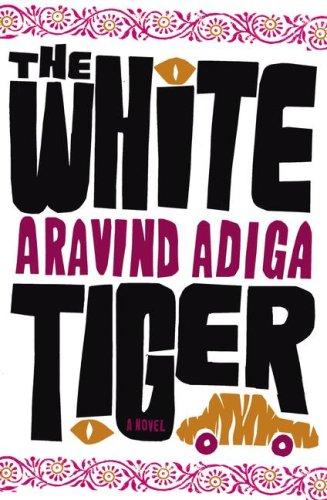
The White Tiger
Aravind Adiga, 2008
215 ratings
§ About Aravind Adiga's books
- Books on SansFiction
- 1
- Published
- 2008
- Average rating
- 3.7 / 5 across 215 ratings
- Genres
- Fiction, Classics, Mystery
The book: The White Tiger (2008)
This rambunctious story of contemporary India shows how religion doesn't create morality, and money doesn't solve every problem--but a person can get what he wants out of life by eavesdropping on the right conversations.
Common questions about Aravind Adiga
- Who is Aravind Adiga?
- Born in Madras (now Chennai) on October 23, 1974, Adiga grew up in Mangalore, India, where he attended Canara High School and St. Aloysius High School. His family later emigrated to Sydney, Australia, where he completed his secondary education at James Ruse Agricultural High School.
- What is Aravind Adiga best known for?
- Aravind Adiga is best known for The White Tiger, published in 2008 with 215 ratings and a 3.7 average. It is the most-rated of Aravind Adiga's books on SansFiction.
- What genres does Aravind Adiga write?
- Aravind Adiga's books on SansFiction are tagged Fiction, Classics and Mystery.