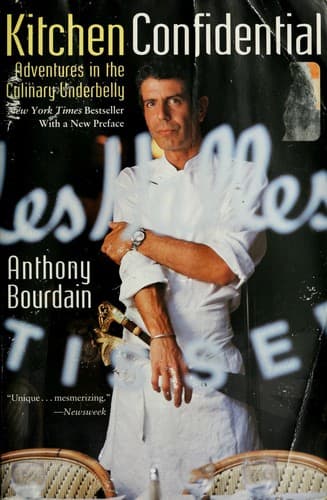
Anthony Bourdain
Also known as Anthony Michael Bourdain
Unfiltered kitchen exposés and immersive travel memoirs transformed culinary non-fiction by pulling back the curtain on professional restaurant culture. Anthony Bourdain, an American chef, author, and television personality, gained widespread literary recognition with his groundbreaking memoir Kitchen Confidential: Adventures in the Culinary Underbelly. His candid prose and insider perspective offered readers a raw, unvarnished look into high-pressure restaurant kitchens while establishing a distinct voice in modern food writing.
Career & Background
Born in New York City on June 25, 1956, and raised in Leonia, New Jersey, Anthony Michael Bourdain developed an early interest in food during a childhood family trip to France. He attended Vassar College before enrolling at the Culinary Institute of America, graduating in 1978. For more than two decades, Bourdain worked as a chef in various New York City kitchens, including Supper Club, Vince & Linda at One Fifth, and Brasserie Les Halles, where he served as executive chef starting in 1998. While managing commercial kitchens, he also authored two crime novels in the 1990s.
Bourdain's literary career reached a major turning point after The New Yorker published his 1999 essay detailing the inner workings of commercial kitchens. The essay's success led directly to Kitchen Confidential: Adventures in the Culinary Underbelly, which became a New York Times bestseller in 2000. Following the book's success, Bourdain transitioned into television, creating and hosting acclaimed culinary travel programs including A Cook's Tour, Anthony Bourdain: No Reservations, and Parts Unknown. He continued writing and broadcasting until his death on June 8, 2018, in France.
Writing Style & Themes
Bourdain's writing is characterized by a point-blank, conversational tone that combines dark humor, vivid kitchen slang, and uncompromising honesty. Rather than idealizing gastronomy, his work explores the labor, camaraderie, and intense stress experienced by line cooks and kitchen staff. His narratives frequently emphasize cultural exploration, encouraging readers to engage with international culinary traditions, street food, and human stories without pretension.
Major Works
- Kitchen Confidential: Adventures in the Culinary Underbelly — Published in 2000 after expanding his 1999 New Yorker essay, this bestselling memoir provides a candid behind-the-scenes look at the restaurant industry and established Bourdain's signature literary style.