
§Author· 3 books
Amy Tan
Also known as Amy Ruth Tan, Amy R. Tan
Narratives detailing the complex relationships between Chinese American daughters and their immigrant mothers form a foundational pillar of late twentieth-century American literature. Amy Tan gained widespread acclaim with her 1989 debut novel, The Joy Luck Club, which spent over forty weeks on The New York Times bestseller list and was adapted into a 1993 feature film. Her multi-generational storytelling explores cultural displacement, family secrets, identity, and the enduring bonds between mothers and daughters across distinct historical and geographic divides.
Career & Background
Born in Oakland, California, in 1952 to Chinese immigrant parents, Tan grew up in Northern California and Switzerland. Her father was an electrical engineer and Baptist minister, while her mother had fled Shanghai in 1949 prior to the Communist takeover, leaving behind three daughters from a prior marriage. When Tan was in her early teens, her father and older brother both died of brain tumors within months of each other. Tan earned a bachelor's degree in English and linguistics and a master's degree in linguistics from San Jose State University, also studying at other institutions including the University of California, Berkeley. Before writing fiction full-time, she worked as a language development specialist for children with developmental disabilities and later built a career as a freelance business writer.
Tan transitioned into creative writing through short fiction, leading directly to the publication of The Joy Luck Club. Following its success, she published a series of popular novels including The Kitchen God's Wife, The Hundred Secret Senses, The Bonesetter's Daughter, Saving Fish from Drowning, and The Valley of Amazement. In addition to her fiction, she authored children's books such as Sagwa, the Chinese Siamese Cat and wrote memoirs, including The Opposite of Fate: Memories of a Writing Life and Where the Past Begins. Her non-fiction work later expanded into nature writing and illustration with The Backyard Bird Chronicles.
Writing Style & Themes
Tan's literary works frequently center on the intricate dynamic between first-generation Chinese immigrant mothers and their American-born daughters. Drawing deeply from her own family history—most notably her mother's harrowing experiences in pre-revolutionary China—her narratives weave together past recollections, oral storytelling, and contemporary struggles with cultural identity and miscommunication. Her prose blends real-world historical upheaval with personal memory, examining how silence, secrets, and inherited trauma shape intergenerational relationships. Beyond her novels, her non-fiction ranges from personal essays on memory and craft to illustrated nature journaling, reflecting a lifelong engagement with observation and storytelling.
Major Works
- The Joy Luck Club — Published in 1989, this debut novel structured around four Chinese immigrant mothers and their four American-born daughters spent over forty weeks on The New York Times bestseller list and was adapted into a 1993 film co-written and co-produced by Tan.
- The Kitchen God's Wife — Inspired by the early life of Tan's mother in China and her eventual flight to the United States, this novel explores secrets, domestic survival, and mother-daughter reconciliation.
- The Opposite of Fate: Memories of a Writing Life — A non-fiction collection of personal essays and memoirs detailing Tan's childhood, family tragedy, creative process, and reflections on choice and destiny.
- The Backyard Bird Chronicles — Published in 2024, this volume features Tan's personal essays and original illustrations documenting her observations of wild birds and nature.
§All Books
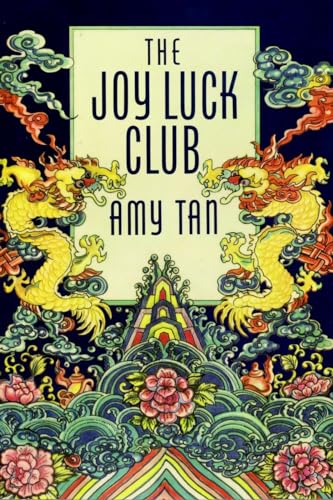
The Joy Luck Club
Amy Tan, 1989
363 ratings
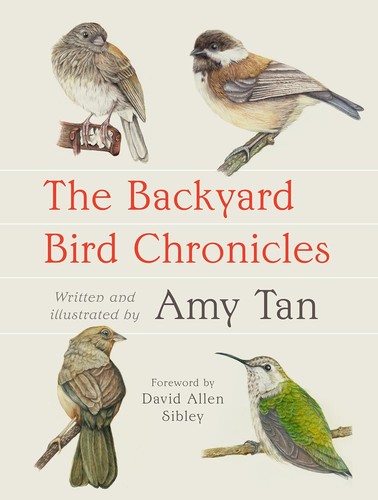
The Backyard Bird Chronicles
Amy Tan, 2024
21 ratings

The Opposite of Fate: Memories of a Writing Life
Amy Tan, 2001
3 ratings
§ About Amy Tan's books
- Books on SansFiction
- 3
- Published
- 1989–2024
- Average rating
- 3.8 / 5 across 387 ratings
- Genres
- China, Classics, Fiction, Foreign Language Study
Start here: The Joy Luck Club (1989)
Four mothers, four daughters, four families, whose histories shift with the four winds depending on who's telling the stories. In 1949, four Chinese women, recent immigrants to San Francisco, meet weekly to play mahjong and tell stories of what they left behind in China.
Common questions about Amy Tan
- Who is Amy Tan?
- Born in Oakland, California, in 1952 to Chinese immigrant parents, Tan grew up in Northern California and Switzerland. Her father was an electrical engineer and Baptist minister, while her mother had fled Shanghai in 1949 prior to the Communist takeover, leaving behind three daughters from a prior marriage.
- What is Amy Tan best known for?
- Amy Tan is best known for The Joy Luck Club, published in 1989 with 363 ratings and a 3.8 average. It is the most-rated of Amy Tan's books on SansFiction.
- How many books has Amy Tan written?
- SansFiction lists 3 books by Amy Tan, published between 1989 and 2024. The most popular are The Joy Luck Club, The Backyard Bird Chronicles and The Opposite of Fate: Memories of a Writing Life.
- Which Amy Tan book should I read first?
- The Joy Luck Club is the usual place to start: it is Amy Tan's most-rated book here, with a 3.8 average.
- What genres does Amy Tan write?
- Amy Tan's books on SansFiction are tagged China, Classics, Fiction and Foreign Language Study.
Explore: China · Classics · Fiction · Foreign Language Study