
§Author· 2 books
Alison Bechdel
Long-running comic strips and graphic memoirs examining queer identity, family history, and contemporary social tensions have established a prominent place in American graphic literature. Alison Bechdel entered national prominence through her self-syndicated comic strip Dykes to Watch Out For, which chronicled lesbian counterculture for twenty-five years and originated the widely referenced Bechdel test. She achieved major critical and commercial recognition with Fun Home: A Family Tragicomic, a tragicomic memoir exploring her relationship with her late father, closeted sexuality, and literary themes.
Career & Background
Born on September 10, 1960, in Lock Haven, Pennsylvania, Bechdel graduated from Oberlin College in 1981 with a degree in Studio Art and Art History. She began self-syndicating Dykes to Watch Out For in 1983, running the strip through 2008 and compiling eleven collected volumes that documented queer community life over a quarter-century. In 2006, she published Fun Home: A Family Tragicomic, which was named the Best Book of 2006 by Time magazine and was later adapted into a 2015 Tony Award-winning Broadway musical.
Following the success of Fun Home: A Family Tragicomic, Bechdel continued exploring autobiographical and narrative themes in Are You My Mother? (2012) and The Secret to Superhuman Strength (2021), alongside her 2025 graphic novel Spent: A Comic Novel. Her contributions to literature and comics earned her a MacArthur Fellowship in 2014, a Guggenheim Fellowship, and an appointment as Cartoonist Laureate of Vermont. She has also served as a Professor in the Practice of English and Film & Media Studies at Yale University.
Writing Style & Themes
Bechdel's work is characterized by the intersection of personal narrative and broader social and political commentary. Her graphic memoirs frequently blend meticulous archival drawings, literary references, and personal recollection to investigate family secrets, gender, sexuality, and psychological interiority. In Spent: A Comic Novel, she addresses the tension between artistic creation and political anxiety, examining how personal lives intersect with broader cultural shifts and consumer culture.
Major Works
- Fun Home: A Family Tragicomic — Published in 2006, this landmark graphic memoir details Bechdel's upbringing in a rural Pennsylvania home, her discovery of her own sexuality, and her complicated relationship with her father, a closeted gay man and funeral director. Time magazine named it the Best Book of 2006, and it was adapted into a Tony Award-winning Broadway musical.
- Dykes to Watch Out For — Self-syndicated from 1983 to 2008, this generational comic strip provided a detailed chronicle of lesbian lives and community over twenty-five years, while also introducing the cultural standard later known as the Bechdel test.
- Spent: A Comic Novel — Published in 2025, this comic novel explores themes of artistic labor, political tension, self-reflection, and anticapitalist values as a cartoonist navigates personal and social turmoil in dark times.
- Are You My Mother? — Released in 2012, this graphic memoir serves as a companion piece to Fun Home: A Family Tragicomic, focusing on Bechdel's relationship with her mother through the lenses of psychoanalytic theory and creative development.
§All Books

Fun Home: A Family Tragicomic
Alison Bechdel, 2006
356 ratings
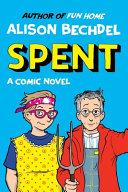
Spent: A Comic Novel
Alison Bechdel, 2025
8 ratings
§ About Alison Bechdel's books
- Books on SansFiction
- 2
- Published
- 2006–2025
- Average rating
- 4.1 / 5 across 364 ratings
- Genres
- Biography & Autobiography, Comics, Lgbtq, Antiques & Collectibles
Start here: Fun Home: A Family Tragicomic (2006)
Fun Home é um marco dos quadrinhos e das narrativas autobiográficas, além de uma obra-prima sobre sexualidade, relações familiares e literatura. Um labirinto da memória trazido à tona com graça, humor e a força das maiores realizações artísticas.
Common questions about Alison Bechdel
- Who is Alison Bechdel?
- Born on September 10, 1960, in Lock Haven, Pennsylvania, Bechdel graduated from Oberlin College in 1981 with a degree in Studio Art and Art History. She began self-syndicating Dykes to Watch Out For in 1983, running the strip through 2008 and compiling eleven collected volumes that documented queer community life over a quarter-century.
- What is Alison Bechdel best known for?
- Alison Bechdel is best known for Fun Home: A Family Tragicomic, published in 2006 with 356 ratings and a 4.1 average. It is the most-rated of Alison Bechdel's books on SansFiction.
- How many books has Alison Bechdel written?
- SansFiction lists 2 books by Alison Bechdel, published between 2006 and 2025. The most popular are Fun Home: A Family Tragicomic and Spent: A Comic Novel.
- Which Alison Bechdel book should I read first?
- Fun Home: A Family Tragicomic is the usual place to start: it is Alison Bechdel's most-rated book here, with a 4.1 average.
- What genres does Alison Bechdel write?
- Alison Bechdel's books on SansFiction are tagged Biography & Autobiography, Comics, Lgbtq and Antiques & Collectibles.
Explore: Biography & Autobiography · Comics · Lgbtq · Antiques & Collectibles