Alice Sebold
Explorations of personal trauma, crime, and afterlife perspectives captured wide reader attention through the success of The Lovely Bones, a novel that examines a family's grief following a devastating loss. Alice Sebold established her literary career by blending unflinching honesty with psychological depth across both fiction and life writing.
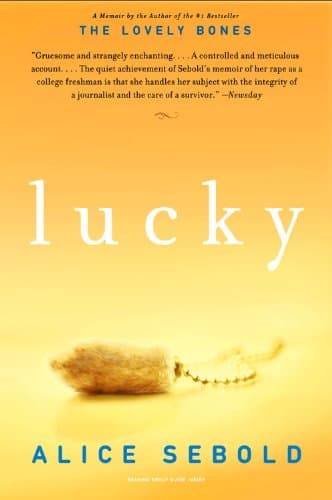
Her published work began with Lucky: A Memoir, an account detailing her personal survival of violence as a college student, establishing recurring themes of vulnerability, recovery, and institutional processing.
Career & Background
Sebold was born on September 6, 1963, in Madison, Wisconsin, and grew up in the suburbs of Philadelphia, Pennsylvania, in a family that loved books. She attended Syracuse University, where she survived a violent assault during her freshman year. She identified her attacker, completed her undergraduate degree at Syracuse, and later pursued graduate coursework at the University of Houston. In the 1990s, Sebold attended the master of fine arts writing program at the University of California, Irvine, where she met fellow writer Glen David Gold, whom she married in 2001 and later divorced in 2012. She also spent time as a resident fellow at the Ragdale Foundation while developing her manuscripts.
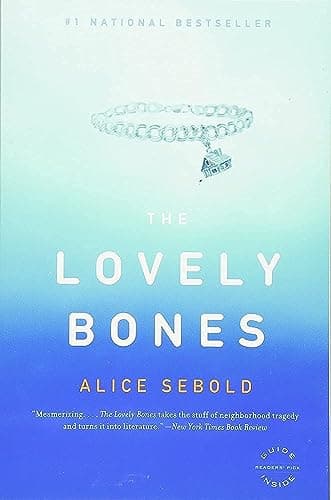
Sebold published her debut book, the non-fiction work Lucky: A Memoir, in 1999 to critical notice. She followed it in 2002 with her breakout debut novel, The Lovely Bones, which spent extensive time on The New York Times Best Seller list and earned the American Booksellers Association Book of the Year Award for Adult Fiction in 2003, as well as the Bram Stoker Award for First Novel in 2002. Director Peter Jackson adapted the novel into a feature film released in 2009. In 2007, Sebold published her second novel, The Almost Moon, continuing her examination of intense personal drama and family secrets.
Writing Style & Themes
Sebold's writing is characterized by its candid examination of trauma, grief, violence, and family dynamics. Her narrative approach often places protagonists in extreme emotional or physical situations, testing how individuals and communities endure in the aftermath of tragedy. By employing unconventional narrative perspectives—such as an otherworldly narrator looking down on her grieving loved ones—Sebold balances harrowing thematic material with moments of domestic intimacy and psychological realism.
Across both memoir and fiction, her prose maintains a direct, meticulous focus on character interiority and human resilience. Rather than relying on sensationalism, Sebold emphasizes the long-term emotional reverberations of traumatic events, exploring how survivors attempt to piece together their identity and relationships after major disruptions.
Major Works
- The Lovely Bones — Published in 2002, this bestselling novel tells the story of Susie Salmon, a young girl who watches from her personal heaven as her family and community cope with her murder. The novel won the 2003 ABA Book of the Year Award for Adult Fiction and the 2002 Bram Stoker Award for First Novel, and was adapted into a 2009 feature film.
- Lucky: A Memoir — Published in 1999, this memoir details Sebold's experience surviving a brutal sexual assault during her freshman year at Syracuse University, her identification of the perpetrator, and the complex emotional and legal aftermath.
- The Almost Moon — Published in 2007, this psychological novel opens with a shocking act of violence and explores the troubled relationship between a mother and daughter over several decades.
The Lovely Bones