Alfred Lansing
Also known as Alfred Mark Lansing
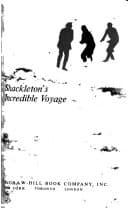
Detailed survival literature and polar exploration history owe a lasting debt to the meticulous narrative reconstructed from original expedition diaries and first-hand interviews following Sir Ernest Shackleton's 1914 Antarctic voyage. Journalist Alfred Lansing brought this harrowing true story to widespread acclaim in his classic account, Endurance: Shackleton's Incredible Voyage. By reconstructing the daily struggles, sheer resilience, and extraordinary leadership displayed when the expedition ship was crushed by Antarctic pack ice, the narrative established a lasting benchmark for non-fiction survival writing.
Career & Background
Born in Chicago, Illinois, on July 21, 1921, Alfred Mark Lansing served in the United States Navy from 1940 to 1946, receiving a Purple Heart for his military service during World War II. Following his discharge, he pursued higher education at North Park College from 1946 to 1948 before attending Northwestern University from 1948 to 1950, where he majored in journalism. Lansing began his professional writing career editing a weekly Illinois newspaper before joining United Press in 1949. He later joined Collier's magazine as a writer in 1952 and subsequently worked as an editor for Time, Inc. Books.
Lansing's research into Antarctic history led to his election as a member of the Scott Polar Research Institute in Cambridge, England, in 1957. This affiliation provided access to historical logs, journals, and surviving members of Shackleton's crew, enabling him to write his definitive 1959 account of the expedition. In addition to his polar narrative, Lansing co-authored Drugs in 1967 alongside Walter Modell as part of the LIFE Science Library series. Lansing passed away on August 27, 1975.
Writing Style & Themes
Lansing's writing style is defined by rigorous journalistic objectivity, immersive chronological structure, and acute focus on psychological resilience under extreme physical adversity. Rather than glamorizing polar exploration, his prose emphasizes the gritty reality of daily survival, routine discipline, and interpersonal dynamics among men isolated in hostile environments. His heavy reliance on primary source materials—including personal diaries, logbooks, and direct interviews with surviving crew members—endows his work with profound historical authenticity and immediacy.
Major Works
- Endurance: Shackleton's Incredible Voyage — Published in 1959, this non-fiction book chronicles Sir Ernest Shackleton's 1914 Imperial Trans-Antarctic Expedition. Drawing directly from original diaries and personal interviews with surviving crew members, Lansing details the crew's 858-day battle for survival after their ship was trapped and crushed by Antarctic pack ice.
- Drugs — Co-authored with Walter Modell in 1967 for the LIFE Science Library series, this educational non-fiction volume examines pharmacology, the scientific development of therapeutic medicines, and the medical impact of pharmaceuticals on human society.