Adam M. Grant
Also known as Adam Grant
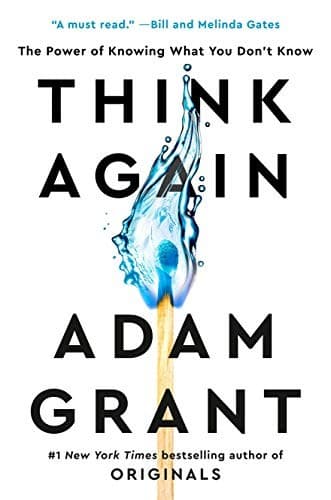
Research in organizational psychology and workplace dynamics offers practical insights into motivation, generosity, and decision-making, most prominently demonstrated in the bestselling book Think Again: The Power of Knowing What You Don't Know. Adam M. Grant has established himself as a central voice in non-fiction science writing by examining how individuals and organizations find meaning, build resilience, and foster creative thinking. His popular science books have sold millions of copies worldwide and have been translated into 35 languages.
In addition to his published volumes, Grant's viral New York Times essay on languishing became one of the most-shared articles of 2021, capturing a widespread cultural moment during the pandemic. His broader public outreach includes hosting the TED podcast Re:Thinking and delivering popular TED talks that have accumulated over 30 million views.
Career & Background
Born on August 13, 1981, in West Bloomfield, Michigan, Adam Grant completed his undergraduate studies at Harvard College before earning his Ph.D. in organizational psychology from the University of Michigan. He began his academic teaching career as an assistant professor of organizational behavior at the University of North Carolina at Chapel Hill from 2007 to 2009. He subsequently joined the faculty at the Wharton School of the University of Pennsylvania, where he became the Saul P. Steinberg Professor of Management and Professor of Psychology. Recognized as Wharton's top-rated professor for seven consecutive years, he has been named one of the world's ten most influential management thinkers and listed among Fortune's 40 Under 40.
Writing Style & Themes
Grant's writing bridges rigorous academic research and accessible narrative storytelling, focusing on workplace dynamics, prosocial behavior, and cognitive flexibility. His work explores how relational job design and prosocial motivation drive career persistence, productivity, and personal fulfillment. Rather than promoting conventional management tropes, he emphasizes empirical evidence regarding non-conformity, mental agility, and mutual support in professional and personal environments. His non-fiction works have consistently earned critical recognition, appearing on year-end best-book lists curated by Amazon, Apple, the Financial Times, and the Wall Street Journal.
Major Works
- Think Again: The Power of Knowing What You Don't Know — This book investigates the critical skill of mental flexibility, encouraging readers to re-examine their assumptions, embrace intellectual humility, and unlearn outdated beliefs in personal and professional settings.
- Give and Take: Why Helping Others Drives Our Success — Grant's debut non-fiction work analyzes how workplace interactions and prosocial behaviors shape professional trajectories, demonstrating why givers often achieve long-term success over takers and matchers.
- Originals: How Non-Conformists Move the World — This volume explores how individuals champion novel ideas, manage risk, and overcome groupthink to spark meaningful innovation across organizations.
- Option B: Facing Adversity, Building Resilience, and Finding Joy — Co-authored with Sheryl Sandberg, this book combines personal experience and psychological research to guide readers through grief, adversity, and trauma recovery.
- Power Moves — This title examines the shifting dynamics of authority, influence, and leadership in modern organizational structures.