
§Author· 3 books
Abraham Verghese
Also known as Abraham Verghese, MD, MACP
Medical narrative literature that bridges technical clinical reality with humanistic empathy has reached global readership through epic fiction and non-fiction centered on the sacred nature of the physical bedside exam, as seen in the wide-reaching epic novel Cutting for Stone. Abraham Verghese, a physician, professor, and author, has built a distinguished body of work exploring how the human element of medicine persists alongside rapid technological advances. As the Linda R. Meier and Joan F. Lane Provostial Professor and Vice Chair for the Theory and Practice of Medicine at Stanford University School of Medicine, his writing draws directly from his extensive clinical career, framing the practice of medicine as a passionate quest, a spiritual calling, and a deeply interactive relationship between patient and healer.
Career & Background
Born in Addis Ababa, Ethiopia, in 1955, Abraham Verghese was the second of three sons born to Indian parents from Kerala who were recruited by Emperor Haile Selassie to teach in Ethiopia. He grew up near the capital city and began his initial medical training at the local university. In 1974, his medical education was abruptly halted when Emperor Haile Selassie was deposed during civil unrest and war. Verghese briefly joined his parents, who had relocated to the United States, working as a hospital orderly in an American facility. This hands-on employment on hospital wards provided him with an invaluable perspective on patient care from the bedside level before he resumed his formal medical studies in India, completing his medical education at Madras Medical College.
After graduating from Madras Medical College, Verghese left India for a medical residency in the United States. Like many foreign medical graduates at the time, he found open positions primarily in less popular community hospitals, an experience he later described in his New Yorker article 'The Cowpath to America.' From 1980 to 1983, he served as an internal medicine resident in Johnson City, Tennessee. He then moved to the Northeast for a two-year clinical fellowship at Boston University School of Medicine, based at Boston City Hospital. During his time in Boston, he observed the early, alarming signs of the HIV epidemic. Returning to Johnson City as an assistant professor of medicine, he confronted the emerging rural AIDS epidemic in regional Tennessee, caring for a continuous stream of young terminal patients in an era before effective antiretroviral treatments were available. This profound clinical experience taught him the subtle, crucial distinction between curing a disease and healing a patient through presence and attentive care.
Driven by a desire to give narrative form to these transformative experiences, Verghese took time away from full-time clinical practice in the late 1980s to attend the prestigious Iowa Writers' Workshop at the University of Iowa, earning a Master of Fine Arts degree in 1991. Following his graduate studies in Iowa, he became professor of medicine and chief of the Division of Infectious Diseases at Texas Tech Health Sciences Center in El Paso, Texas, where he lived and taught for eleven years. In 2002, he moved to San Antonio as the founding director of the Center for Medical Humanities & Ethics at the University of Texas Health Science Center San Antonio. There, he established the guiding mission 'Imagining the Patient's Experience' to preserve empathy among medical students and instituted small-group bedside rounds to emphasize physical examinations in diagnostic care.
In 2007, Verghese was recruited to Stanford University School of Medicine as a tenured professor and senior associate chair for the Theory and Practice of Medicine. He was subsequently appointed the Linda R. Meier and Joan F. Lane Provostial Professor and Vice Chair for the Theory and Practice of Medicine. At Stanford, he spearheaded the establishment of the Stanford 25 initiative, a clinical program designed to teach medical residents and students essential physical exam techniques and diagnostic skills to recognize physical signs of disease. His ongoing contributions to clinical practice and public humanities earned him a Heinz Award in February 2014 from Teresa Heinz and the Heinz Family Foundation, as well as a 2015 National Humanities Medal.
Writing Style & Themes
Abraham Verghese's literary perspective is grounded in the belief that medicine is inherently humanistic rather than merely technological. In his written work and public addresses, he frequently notes that modern health systems risk prioritizing electronic data over the physical human being in the hospital bed. In a December 2008 article published in the New England Journal of Medicine titled 'Culture Shock: Patient as Icon, Icon as Patient,' he articulated how physical touch and attentive bedside examinations form a sacred ritual of diagnostic attentiveness and emotional healing. This ethos infuses both his non-fiction clinical memoirs and his expansive fiction.
Across his non-fiction and novels, Verghese explores themes of geographic displacement, international migration, family heritage, addiction, and spiritual calling within clinical work. His essays and articles have been featured in premier national publications, including The New Yorker, The Atlantic, The New York Times, The New York Times Magazine, Granta, Texas Monthly, Forbes.com, and The Wall Street Journal. In addition to his published literature, he co-hosts the Medscape podcast Medicine and the Machine alongside Eric Topol, discussing the evolving balance between advanced medical technology, artificial intelligence, and compassionate bedside care.
Major Works
- My Own Country: A Doctor's Story — Centering on his clinical experiences during the rural AIDS epidemic in Johnson City, Tennessee, My Own Country: A Doctor's Story reflects on patient suffering, social stigma, and the emotional transformation of a young physician. The book was selected as one of five Best Books of the Year by TIME magazine and was adapted into a Showtime television film directed by Mira Nair.
- The Tennis Partner: A Story of Friendship and Loss — Written during his tenure in El Paso, Texas, The Tennis Partner: A Story of Friendship and Loss details Verghese's deep friendship with a medical resident battling drug addiction. The memoir examines companionship, athletic devotion, codependency, and the tragedy of substance abuse in the medical community, earning recognition as a New York Times Notable Book.
- Cutting for Stone — Set in Ethiopia and the United States, Cutting for Stone is an epic novel following twin brothers Marion and Shiva Stone, born in an Addis Ababa hospital to an Indian nun and a British surgeon. The novel portrays medicine as a romantic, spiritual pursuit while examining surgical mastery, family dynamics, and human-centered clinical care versus sterile hospital bureaucracy.
- The Covenant of Water — Spanning seven decades from 1900 to 1970 in Kerala, India, The Covenant of Water follows three generations of a family burdened by a condition in which at least one member in every generation dies by drowning. The novel explores themes of family legacy, medical discovery, faith, and human connection, becoming a New York Times Best-Seller and an Oprah's Book Club selection.
§All Books
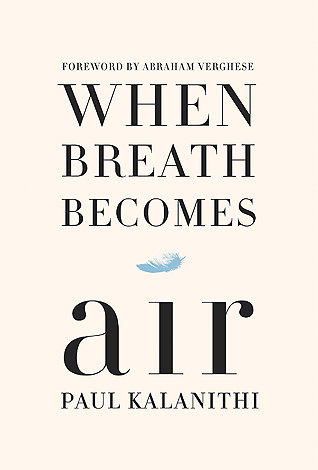
When Breath Becomes Air
Paul Kalanithi, 2016
615 ratings

The Covenant of Water
Abraham Verghese, 2023
123 ratings

Cutting for Stone
Abraham Verghese, 2009
110 ratings
§ About Abraham Verghese's books
- Books on SansFiction
- 3
- Published
- 2009–2023
- Average rating
- 4.3 / 5 across 848 ratings
- Genres
- Biography, General, Husband And Wife, Nonfiction
Start here: When Breath Becomes Air (2016)
For readers of Atul Gawande, Andrew Solomon, and Anne Lamott, a profoundly moving, exquisitely observed memoir by a young neurosurgeon faced with a terminal cancer diagnosis who attempts to answer the question 'What makes a life worth living?' At the age of thirty-six, on the verge of completing a decade's worth of training as a neurosurgeon, Paul Kalanithi…
Common questions about Abraham Verghese
- Who is Abraham Verghese?
- Born in Addis Ababa, Ethiopia, in 1955, Abraham Verghese was the second of three sons born to Indian parents from Kerala who were recruited by Emperor Haile Selassie to teach in Ethiopia. He grew up near the capital city and began his initial medical training at the local university. In 1974, his medical education was abruptly halted when Emperor Haile Selassie was deposed during civil unrest and war.
- What is Abraham Verghese best known for?
- Abraham Verghese is best known for When Breath Becomes Air, published in 2016 with 615 ratings and a 4.4 average. It is the most-rated of Abraham Verghese's books on SansFiction.
- How many books has Abraham Verghese written?
- SansFiction lists 3 books by Abraham Verghese, published between 2009 and 2023. The most popular are When Breath Becomes Air, The Covenant of Water and Cutting for Stone.
- Which Abraham Verghese book should I read first?
- When Breath Becomes Air is the usual place to start: it is Abraham Verghese's most-rated book here, with a 4.4 average.
- What genres does Abraham Verghese write?
- Abraham Verghese's books on SansFiction are tagged Biography, General, Husband And Wife and Nonfiction.
Explore: Biography · General · Husband And Wife · Nonfiction